
Starting a Teaching Career Abroad: How to Prepare Your Documents
Imagine teaching halfway across the world, with an international classroom right in front of your eyes and a whole new culture outside the window. But before that dream comes true, you’ll need to face a mountain of paperwork. Understanding the requirements to teach English abroad is crucial to ensure your big move stays on track. This post explains how to turn your professional history into a documentation package that’s ready for foreign acceptance.
Confirm the Requirements for Your Teaching Destination
Here’s the truth: there isn’t a universal document checklist for teaching abroad. The destination country, specific employer, and timeline all operate under different rules. Researching exactly what you must gather will help you avoid delays.
National Immigration and Education Rules
Begin with the non-negotiable baseline set by the immigration agency and other licensing bodies that oversee foreign teachers. For instance, embassies and consulates often publish a document list for every visa category, while ministries of education outline thresholds for work permits.
Employer-Specific Submission Standards
Beyond government requirements, your employer and recruitment agency likely request a set of credentials during the hiring process. Clarify with the requesting party on the exact standards they require, such as notarized degrees or certificates, reference letter formats, and background screenings.
A Realistic Document Preparation Timeline
The requesting institution may ask for additional certifications, such as apostilles and consular legalization. If this requirement applies, you should typically expect 8 to 12 weeks for processing. Build in buffer time so your start date won’t be pushed back due to unexpected delays.
Gather Identity and Qualification Documents
Now that you’ve understood the basic rules, it’s time to pull together the records that show who you are and what you do. Most English teaching programs abroad concentrate their requirements on the same core documents.
Passport Validity and Condition
Your passport must have at least 6 months of validity remaining beyond your intended stay, as most countries require. Check that it’s in pristine condition: no torn pages, stains, or damage that could affect visa approval. Renew it if necessary before submitting documents for authentication.
University Degree and Academic Transcripts
The backbone of your file is proof of qualification, particularly for roles requiring a minimum degree. Request fresh certificates and official transcripts directly from the school registrar’s office rather than using old photocopies from your drawers.
Teaching License, Professional Registration, and Language-Teaching Certificates
To teach English abroad, it’s also essential to gather any teaching credentials you have. State-issued teaching licenses, professional registrations, or TEFL/TESOL certificates carry weight when foreign schools evaluate your application.
Prepare Your Employment Application Records
With your identity and qualifications straight, shift your focus to proving to the potential employer you’re a good fit for the position. Many assume a degree is enough, but this stage helps you showcase your professional story more clearly.
International Teaching CV
Tailor your CV to the international audience. List your classroom experience in chronological order, subject specialties, age groups, and any other relevant cross-border teaching work. Use a simple format, and save it as a PDF.
Professional Reference Letters
Secure at least 2 or 3 reference letters from recent principals or department heads. These should be on official letterhead and include specific language: job title, duties, dates of employment, and a clear statement about your classroom performance. Request references early since they take time to write well.
Signed Job Offer and Employment Contract
The centerpiece of your visa application is a job offer and employment contract. Once they arrive, check the salary, working conditions, contract length, and housing accommodation before signing. Additionally, ensure the employer’s information matches what you provide on visa forms.
Obtain Background and Health Certificates
Teaching English abroad often requires a clean criminal history and physical fitness. Most nations want substantial evidence that you’re safe to work around students, and this is almost as scrutinized as your teaching credentials.
Criminal Record Certificate
Request a criminal report from the appropriate national or local police department, depending on the destination’s specifications. For U.S. residents, this often means an FBI background check or a state police clearance issued within a certain timeframe, so timing your order matters.
Medical Examination Results
Work visa applications almost always require a comprehensive health examination performed by a licensed physician as part of the documentation. Download the official forms from the embassy’s website and have your physician fill out every field, since a generic doctor’s note won’t work.
Vaccination and Health Records
Certain schools or immigration agencies may ask for proof of vaccinations or health records upon your arrival. Keep your immunization papers alongside the medical exam results, or request updated copies if they’re too old.
Legalize or Apostille Documents for International Use
Authentication can be the trickiest part for many applicants. Your documents are valid domestically, but on the global stage, they either need legalization or apostille certification for foreign authorities to recognize them.
Documents Commonly Requiring an Apostille
Most public and private records in your file require this certification. Vital records, university degrees, academic transcripts, criminal background checks, teaching licenses, and even medical results need an apostille before they can be accepted overseas. Always verify which records must be apostilled with the requesting body.
Issuing-Country and Destination-Country Rules
Hague Convention member countries accept the apostille, while non-members require additional certifications from their embassy or consulate. Hence, check your destination’s membership status to make sure you’re taking the right authentication path. Moreover, follow the correct chain: state-issued and private documents go to the individual state while federal records must be verified through the U.S. Department of State.
Processing Times and Validity of the Underlying Documents
Timelines vary by authentication office, and federal authority often takes longer to process due to high requests. In terms of shelf life, some certificates like criminal background checks are considered valid for 3 to 6 months after the issue date. Pay attention to these time constraints to avoid starting from scratch.
Arrange Certified Translations
Besides obtaining document legalization or apostille, you may still need to have the papers translated into the local language. If your destination’s official language isn’t English, coordinate certified translation to bridge this gap.
Approved Translator Requirements
Not any native speaker can translate the documents for you. For official purposes, most countries accept work done by court-certified or sworn translators who provide statements attesting accuracy. Confirm specific rules before hiring anyone to ensure the translations will be accepted.
Translation Formatting and Supporting Copies
Translations must often be physically attached to the original document and formatted as closely as possible. Sometimes, foreign governments request that the apostille be translated as well. Include any supporting copies if the requesting institution asks for them.
Consistency of Names, Dates, and Personal Details
Your data should appear identical across all translated records for your work visa application to move forward. Discrepancies such as a misspelled name or a wrong-formatted date in your apostilled diploma and diploma translation will trigger additional review and requests for resubmission.
Assemble Your Work Visa Application
Once your documents are apostilled and translated properly, it’s time to bring them together into a visa submission package. This is where your hard work pays off, so don’t miss any forms or specifications that may cause a frustrating rejection.
Employer Sponsorship Evidence
Many visa procedures specify evidence of employer sponsorship as non-negotiable for work authorization. This is typically a formal sponsorship or invitation letter from the employer in compliance with local labor laws. Make sure your details on this document match other records for smooth processing.
Financial and Accommodation Records
Some immigration offices demand evidence that you can support yourself upon arrival. Have your bank statements, proof of savings, and housing arrangements ready to prevent last-minute scrambling. These records demonstrate that you won’t become a financial burden on the host country’s system.
Application Forms and Visa Photographs
Complete all required forms carefully, ensuring all the details are accurate and complete. Photographs must meet strict specifications proposed by your destination, such as dimensions, background, neutral expression, or recency. Consulates may reject photos that don’t satisfy their guidelines outright.
Organize and Protect the Completed Document Set
Congratulations — you’ve crossed the finish line! Now, your paperwork is fully authenticated, translated, and assembled for foreign reviews. But one more thing to note down: it should be safe and accessible the moment you need it. Here’s how:
Originals and Certified Copies
Original documents like passports, university degrees, and professional licenses are irreplaceable and should be kept separated from certified copies. Never submit an original degree unless it’s explicitly requested. You may order multiple certified copies for immigration offices, employers, or local authorities to save time.
Encrypted Digital Backups
Scan your physical documents and store the digital copies in a secure cloud for access from anywhere. This helps you retrieve a record when a visa or customs officer asks for a quick look without going through the entire paper package. You can also use the backups for reprints or emails instantly if institutions accept electronic documents.
Travel-Day Document Folder
Create a folder for the travel day with just the essentials you’ll need upon arrival in the destination country. Include your passport, visa, job contract, and employer’s contact details. Keep this folder in your carry-on instead of checked luggage so you can present it whenever needed.
Take the Next Step Toward Teaching Abroad
Preparing for your teaching career abroad is a marathon, not a sprint. From gathering copies to arranging certified translations, every step requires patience and precision. If you prefer professional assistance to navigate the red tape, EZ Apostille can handle the most confusing part for you — securing an apostille for your degree. Contact us today to kickstart your international journey!
FAQ
More questions about requirements for teaching English abroad? We have answers to the most common ones here.
Can qualifications issued under a maiden name still be accepted?
Of course! However, you’ll likely need to provide supporting documents, such as a marriage certificate, to clarify the difference between your old and current name. This paperwork may require proper authentication and translation, like other teaching credentials.
Are extra documents needed when relocating with a spouse or children?
Yes, if you’re relocating with family members, each dependent will need to have their own set of documents. These include birth certificates for children, marriage licenses for a spouse, background checks for adult applicants, and health examinations for all dependents.
Can the same prepared documents be used for applications in several countries?
Technically, yes. However, each country has unique submission requirements and authentication rules, so don’t assume one set of documents fits all. If possible, it’s best to have a separate package for each country you’re applying to.
Should original certificates be given to a recruiter or school?
No, don’t hand in your originals unless specifically requested. Most recruiters and schools work with certified copies, so order them from the issuing institutions beforehand and confirm with the requesting authority whether they’re acceptable.
Which passport should a teacher with dual citizenship use?
It depends on the destination country’s work visa rules. Most of the time, you may use the passport that’s most advantageous for your travel. Consult with your case officer for guidance regarding dual citizenship.
Can another person collect completed documents on the applicant’s behalf?
This varies by issuing authorities. Some allow a third party to pick up the results with written authorization, while others require the applicant to appear in person with valid identification.
Related Posts
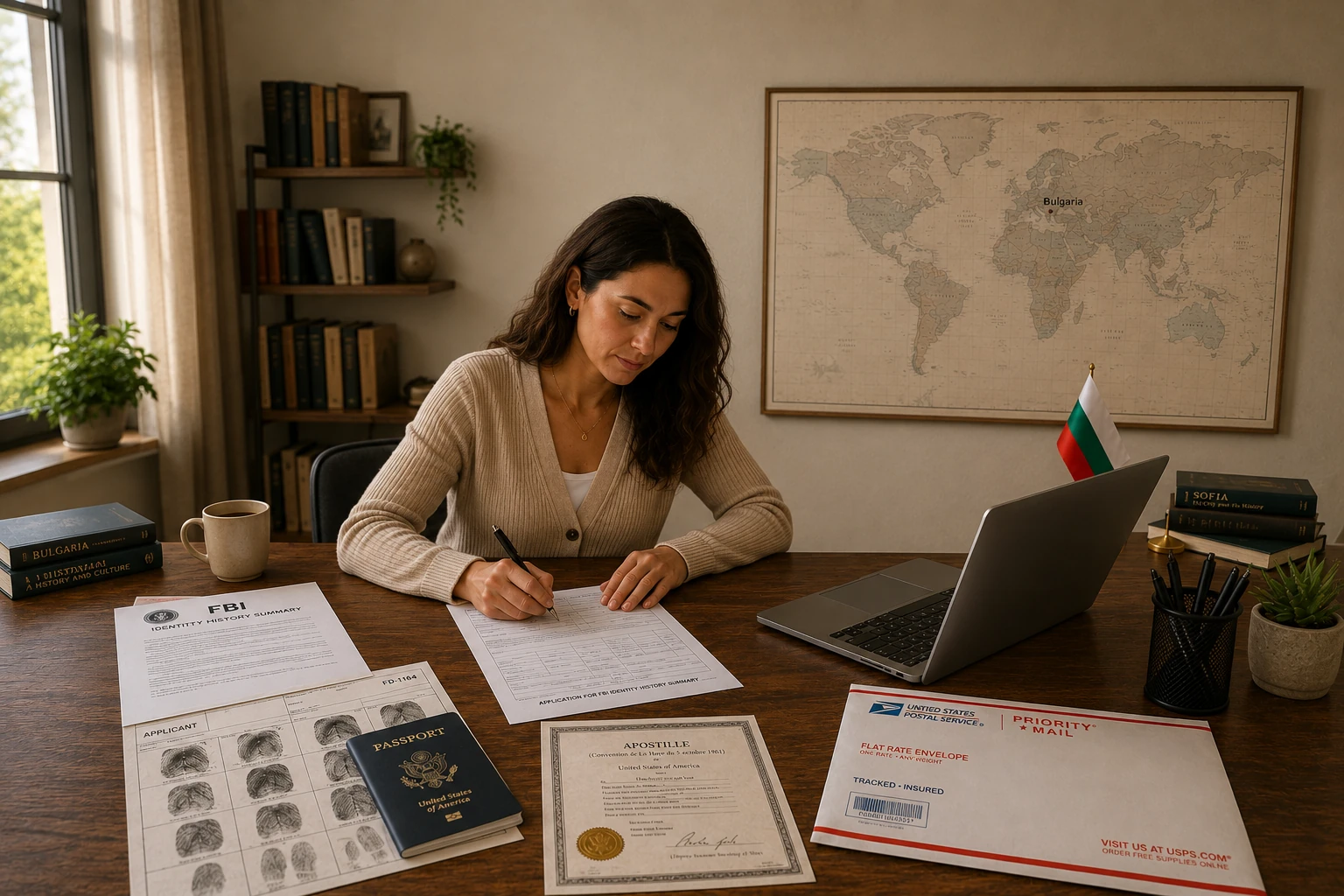
FBI Background Check for Bulgarian Residency: What U.S. Applicants Need to Know

Getting Married Abroad: U.S. Documents Couples May Need