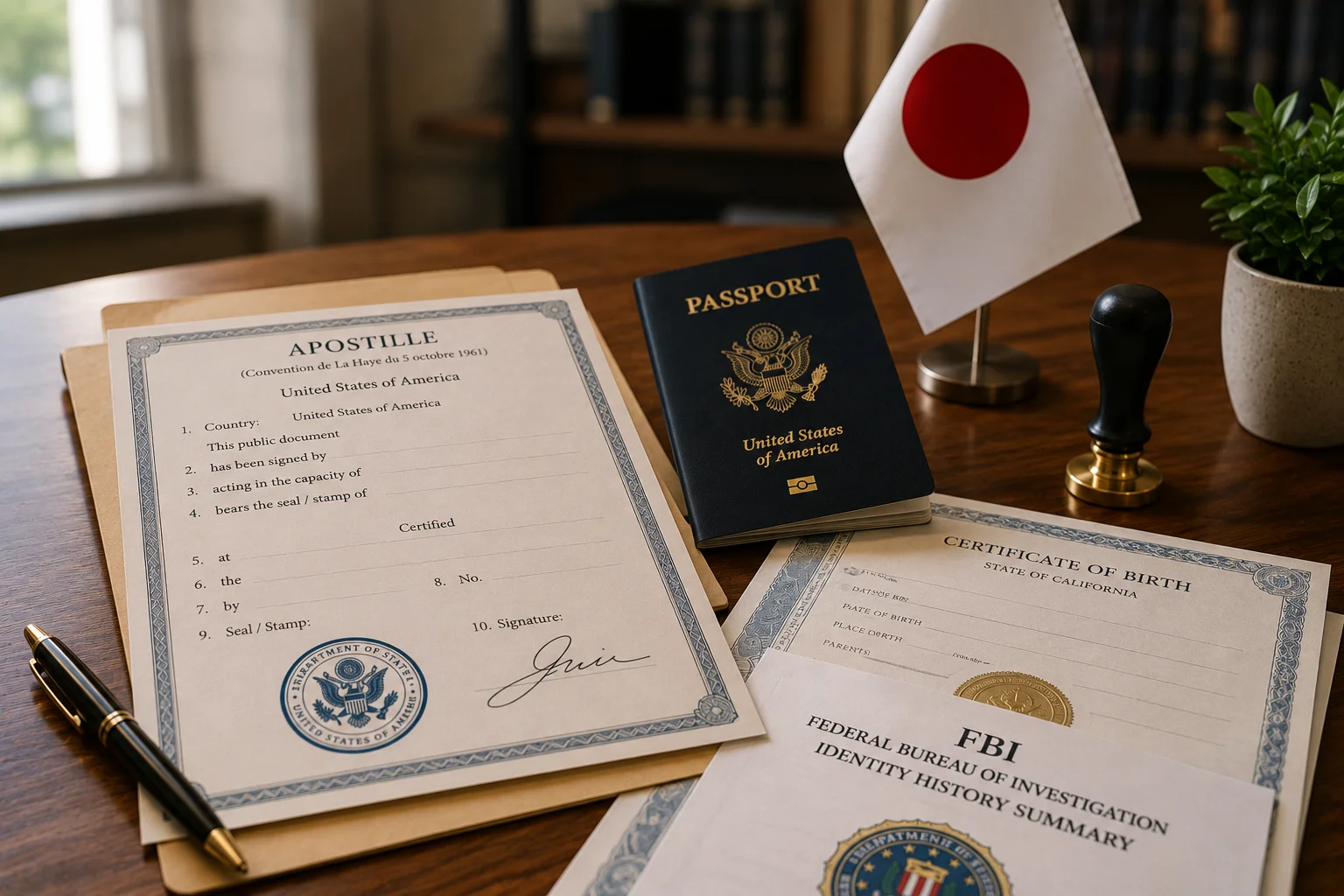
How to Apostille Documents for Use in Japan
You’re finally taking the leap and packing up for Japan. But there’s one challenge before you arrive in Tokyo: Japanese officials don’t automatically recognize your domestic documents. When moving to Japan from the U.S., you’ll need an international certification called an apostille. This post explains specifically how to secure an apostille for Japan to make the transition burdenless.
U.S. Documents Commonly Submitted in Japan with an Apostille
You must be wondering which records qualify for this authentication, and it’s totally normal. Whether moving for work, study, or business reasons, an apostille for U.S. documents ensures Japanese authorities accept them as valid. Let’s go through the document categories that are frequently requested for Japan.
Vital Records
Birth certificates, death certificates, and adoption papers rank as the top documents required in Japan, especially for residency, family sponsorship, or inheritance matters. These must be certified documents with proper apostilles to be considered legitimate in official proceedings — photocopies won’t work.
Background Checks
Japanese companies and immigration offices may demand criminal background checks before offering a job or granting permission for long-term stays. For most cases, that means an authenticated FBI background check or a state police clearance. Background checks often expire quickly, so timing is key here.
Marriage and Single Status Documents
Marriage licenses are typically critical for spousal visa applications in Japan. Planning to register a marriage at a local city office, on the other hand, requires single status affidavits, which basically state that you’re eligible to wed. All must be apostilled to be accepted by Japanese officials.
Academic Records and Diplomas
Joining a graduate program or assuming a teaching position? Your academic certifications must be officially verified for a student visa or work permit. Authorities or institutions may reject academic credentials if they’re submitted without proper authentication.
Legal and Personal Authorization Documents
When handling properties, opening bank accounts, and traveling with minors, you’re likely to be asked for apostilled powers of attorney, affidavits, or consent letters. These can be created privately, notarized, and then submitted for apostilles.
Business and Corporate Records
Launching a branch office or entering into a partnership in Japan requires document authentication. Incorporation papers, bylaws, and certificates of good standing are the most common records that prove an entity’s legitimacy and must be accompanied by an apostille for recognition.
Federal Records and Certificates
Any records issued by a federal agency — the FBI or the Supreme Court, for instance — must be authenticated by the U.S. government for international use. These records, including FDA certificates and export documents, are essential in international trade, regulatory compliance, and legal proceedings in Japan.
State vs. Federal Apostille for Japan
Many U.S. citizens moving to Japan struggle to identify the authentication office to which they should submit their requests. The difference lies in which authority issued the document in the first place, usually the state or federal government. Here’s a quick breakdown to ensure your documents are routed to the right place.
State-Issued Documents
Records originating in an individual state must be authenticated by the Secretary of State’s office or an equivalent agency in that specific state. Examples of state-issued documents are:
- Vital records issued by a state Department of Health
- Business registrations filed with a state Corporations Division
- Custody orders made by a county court
Each state has its own procedures, and the documents must meet both the state apostille submission standards and Japan’s requirements to be recognized.
Notarized Private Documents
Private agreements, affidavits, and powers of attorney also fall within the jurisdiction where the notarization takes place. That means the state office that commissions the notary public is responsible for confirming the authenticity of these notarized documents.
FBI Background Checks
Unlike local criminal reports, FBI background checks are federal documents and must be authenticated at the federal level. Hence, you must direct your request to the U.S. Department of State (DOS) in Washington, D.C. for authentication.
Federal Court and Agency Records
Similarly, official documents from the U.S. federal courts and many other federal agencies must go through federal authentication. Typically:
- Certificates of naturalization from the USCIS
- Judgments by a district court
- SSA benefit verification letters
Only the DOS can provide authentication services for these documents, ensuring Japanese recipients recognize them as authentic without question.
Step-by-Step Process to Apostille U.S. Documents for Japan
Delays often happen because people skip crucial steps, so whether you’re taking the DIY approach or relying on expert apostille services for Japan like EZ Apostille, it’s wise to know the order of operations, which we detail below.
Step 1 — Identify the Document Type
Is it a vital record or a professional license? Determining the type of document you need to submit to the Japanese government is the very first step. This also allows you to identify the issuing agency and eventually the correct apostille office.
Step 2 — Prepare the Original, Certified Copy, or Notarized Version
Order certified copies from the issuing public agency, or get original documents notarized by a state notary public. For diplomas, most states require notarized copies signed by the school’s registrar. A home photocopy will be turned down.
Step 3 — Submit the Document to the Correct Apostille Authority
Again, state documents go to the Secretary of State’s office in the appropriate jurisdiction, while federal records must be sent to D.C. Submission can often be made by mail or hand delivery. Check the specific rules of your apostille office.
Step 4 — Receive the Apostilled Document
Once the process is completed, your record will be returned with an apostille attached. Scan through your details to make sure everything matches. Don’t detach the certificate from the underlying document, as it will become invalid.
Step 5 — Submit the Apostilled Document to the Japanese Recipient
Finally, it’s time to forward the whole package to the end recipient in Japan. Use a trackable international courier to ensure secure and timely delivery. Foreign officials then check the apostille reference number to confirm authenticity.
Using Apostilled U.S. Documents in Japan: Translation and Local Rules
It’s worth mentioning that an apostille only verifies whether signatures and seals are authentic and has nothing to do with a document’s content. Therefore, if Japanese authorities want to assess your information, they will likely demand a certified translation. Always inquire with the receiving institution about their translation and formatting rules in advance.
Processing Time for Japan-Bound Apostilles
Timing is paramount, especially when requesting an apostille for immigration purposes. State-level apostilles typically take between 3 business days and 4 weeks, depending on the authentication office. Federal apostilles usually require a longer processing time, which may exceed 5 weeks. Expedited processing is available for certain states and through third-party services at an extra cost.
Common Mistakes to Avoid
Many clients encounter the same setbacks when preparing an apostille for immigration and presenting it to the Japanese embassy. Simple mistakes can cost you weeks, so stay alert to these pitfalls for a smoother international journey.
Submitting the Wrong Document Version
Sending a hospital-issued birth record instead of an official version will end in a rejection. The Apostille office and Japanese authorities only accept certified copies or notarized originals, so ensure your document has an official signature or seal.
Sending the Document to the Wrong Office
State-issued paperwork must go to the relevant state office, while only the DOS can authenticate federal documents. Double-check the address before you mail. Otherwise, your request will be returned unprocessed, wasting your effort and adding weeks to the timeline.
Missing Notarization Before State Apostille
Private contracts, statements, and letters must be notarized first, or they won’t qualify for authentication. While many are aware that affidavits and powers of attorney require notarization, they seem to overlook other documents that also do.
Using an Outdated Background Check or Certificate
Criminal background checks and certain certifications have strict validity windows. Obtaining an FBI report too early before your submission deadline may force you to request a replacement, as Japanese officials deem it outdated.
Ignoring Japanese Institution Instructions
Some ward offices have unique requirements, such as additional translation, certification, or submission guidelines. Read their website carefully or contact them for clarification, as assumptions can invalidate your application in the end.
Mailing Originals Without Delivery Planning
Sending irreplaceable original documents overseas is risky, as regular mail can be slow and increases the chance of loss or damage. Always use a trackable courier service with signature confirmation to protect your important paperwork.
Why Use a Professional Apostille Service for Japan
Online apostille services for Japan, like EZ Apostille, can save the day when you’re up against a tight deadline, juggling multiple documents, or need recurring support. Expert assistance is also valuable for busy professionals or first-timers who are confused about the difference between state and federal rules. Whichever your case, engaging experts means faster turnaround and seamless acceptance abroad.
Get Your Apostille for Japan Without Setbacks
Once you know which records to submit, where they must go, and how to avoid mistakes, securing an apostille for Japan won’t cause a headache. Ready to get approval the first time? Reach out to EZ Apostille! We’re here to navigate government processes so you don’t have to.
FAQ
Here are some answers about apostilles for U.S. documents when relocating to Japan.
Can Japan accept an apostille issued by any U.S. state?
Yes, because Japan is a member of the Hague Convention. Under this treaty, Japanese institutions recognize apostilles issued in any of the 50 U.S. states.
Does one apostille cover more than one document?
No, an apostille is attached to and verifies only one document.
Can Japan request the original document after receiving a copy?
Yes, Japanese authorities may request the original document to cross-check after they’ve reviewed the copy.
Is a previous apostille reusable for a new Japanese application?
Yes, unless the requesting agency imposes an age requirement for the underlying document. In such cases, you’ll need to order a fresh copy and have it apostilled.
Can a damaged certificate still be submitted for apostille?
No, a torn, stained, altered, or otherwise compromised document will be rejected upon submission. Request a replacement first before sending your apostille request.
Are electronic apostilles accepted for use in Japan?
Currently, Japan recognizes e-Apostilles under the e-APP, but most official processes favor physical apostilles with wet signatures and embossed stamps. Verify with the specific receiving agency first to avoid rejection.
Can a document be apostilled again after the first apostille was issued?
Yes, you can request a fresh apostille from the same authentication office only if the underlying document is still intact and valid. Otherwise, you must obtain another certified copy or create a new private document for an apostille.
Related Posts
FBI Background Check for Bulgarian Residency: What U.S. Applicants Need to Know

Getting Married Abroad: U.S. Documents Couples May Need