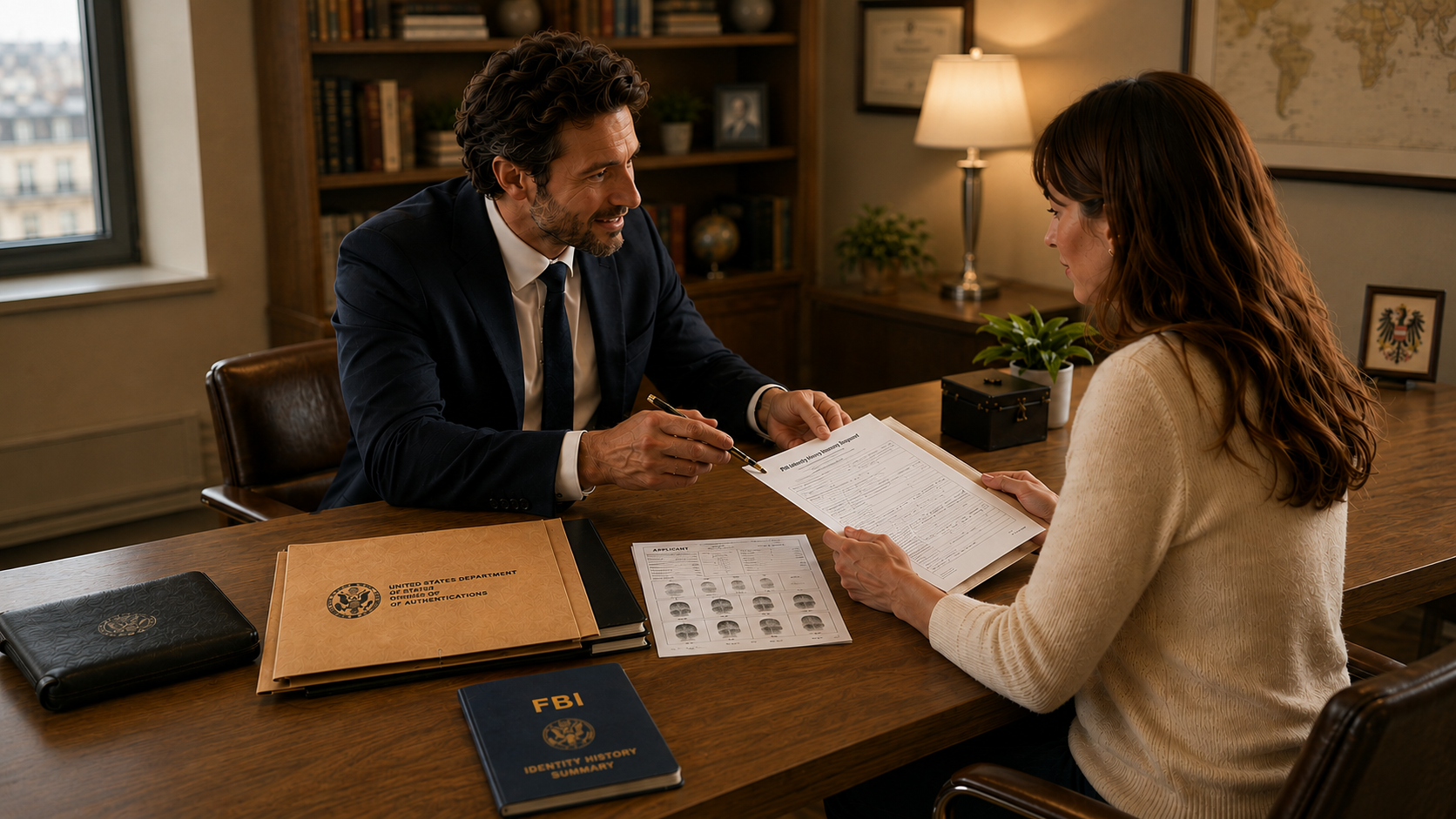
Do You Need an FBI Background Check to Study Abroad?
Studying abroad offers a valuable chance to enhance your education and explore different cultures. However, securing an FBI background check is frequently necessary for student visas and various academic activities overseas.
This article will provide a comprehensive overview of exactly when you need an FBI background check for studying abroad and how to get one without hassle or setbacks.
Study Abroad Situations That May Require an FBI Background Check
Getting an FBI background check is often a necessary step before pursuing international educational opportunities. It’s important to know when it’s required, as not having one when needed can lead to significant issues.
Student Visa or Residence Permit Applications
To receive permission to live and study in another country, it’s common to have to provide your criminal history via an FBI background check before your student visa or residence permit can be approved. Depending on the country, your rap sheet may also require legalization or an apostille to be legally accepted.
Long-Term Academic Programs
Long-term academic programs require extended stays in the country, increasing the chances that an FBI background check will be necessary for studying abroad. Typical examples include:
- Doctoral programs
- Undergraduate and master’s studies
- Exchange programs
Internships, Teaching, and Volunteer Placements
For programs that involve real-world experience, criminal records are often required as part of the standard screening process to ensure you meet the role’s criteria. This is especially true for teaching and volunteer placements because of the sensitive nature of the environment. Typical roles include:
- Teaching assistant placements
- University internships
- Charity volunteer placements
Programs Involving Children or Healthcare
For programs that center around vulnerable groups, such as children or patients, providing a record of your criminal history is a practical way to safeguard these individuals. This includes:
- Student teaching placements
- Nursing internships
- Hospital placements
Preparing an FBI Background Check for International Use
Submitting your FBI background check for studying abroad without proper preparation may result in rejection by foreign authorities. Therefore, it is essential to follow the correct procedures and provide the necessary supporting documents.
Federal Apostille for FBI Reports
For countries that have ratified the Hague Apostille Convention, many need your rap sheet to be authenticated with an apostille before they consider it valid for international purposes. Since FBI reports are issued by a federal agency, your FBI background check must be authenticated with a federal apostille — rather than a state one — if mandated by your destination country. This federal apostille can only be obtained through the U.S. Department of State.
Authentication Route for Non-Hague Countries
For countries not covered by the Convention, full legalization is used for authentication instead of an apostille. This process requires extra steps, longer lead times, and higher costs. The procedure is outlined below:
- Get your FBI report
- Obtain federal authentication
- Submit it to the embassy or consulate of your destination country for legalization
Consulate or University Submission Rules
Each country has its own regulations regarding the acceptance of FBI checks, and these rules can differ significantly. They may also change over time, so it’s crucial to check these requirements early to avoid complications. Important aspects to verify include translation needs, validity periods, and rules for certified copies.
Additionally, universities often have their own protocols. For instance, governments typically require your FBI record when applying for a visa, while universities usually need it during enrollment. Since timelines and requirements can vary, it’s essential to confirm the specific procedures with your university to ensure compliance with both sets of regulations.
Documents Often Submitted With an FBI Check
Knowing which documents typically accompany an FBI background check for studying abroad will help ensure that your submission includes the right paperwork to pass through the process without holdups.
Passport and Student Visa Forms
Your passport and student visa forms are typically submitted alongside your FBI check. Together, these documents are used by foreign authorities to verify your identity, establish your reason for entering the country, and determine whether you meet the requirements. Importantly, your passport must remain valid for at least six months beyond your return date to qualify.
University Acceptance Letter
Most countries need an official acceptance letter from a legitimate university to verify your admission before issuing a visa. This letter includes key details that can be checked during your application, such as:
- Name of the institution
- Course information
- Dates of enrollment
- Study duration
Proof of Housing, Insurance, or Financial Support
Foreign governments often require documents like proof of accommodation, insurance, and financial resources to accompany your FBI background check for studying abroad. Providing this information helps demonstrate your ability to support yourself during your time overseas. This may include:
- Bank statements
- Health insurance records
- Housing contracts
- Scholarship or financial support records
FBI Background Check Timing for Study Abroad
Timing matters because an FBI report, apostille, translation, and visa appointment may all follow different rules. Some countries or universities require recently issued background checks, so requesting the report too early can be just as inconvenient as starting too late.
FBI Report Request Timing
Before requesting your FBI background check for a student visa, check the validity period set by your destination country, consulate, or university. Some authorities may only accept reports issued within a specific timeframe, such as the last three or six months.
Once you know the rule, work backward from your visa appointment or application deadline. This gives you enough time to receive the FBI report, complete any apostille or legalization steps, and prepare translations if they are required.
Apostille Processing Window
Getting an FBI background check apostille can add time to your study abroad preparation because FBI reports are federal documents. If your destination country requires an apostille, the request must go through the U.S. Department of State rather than a state office.
If your visa appointment is approaching, EZ Apostille can help you move through the federal apostille process with fewer unknowns. Our team reviews your FBI report, prepares the request, coordinates submission, and arranges secure return delivery, helping you avoid common filing issues and unnecessary mailing delays.
Visa Appointment Deadline
Before scheduling a visa appointment, confirm which documents must be ready at the time of submission. In many cases, it is safer to wait until you have the FBI report, apostille, and any required translation in hand. If appointment slots are limited, check the consulate’s rules early so you can plan your document timeline around the available dates.
Common Mistakes That Delay Approval
A student visa file can be delayed by details that seem minor at first: a missing apostille, an outdated FBI report, a name mismatch, or a translation issue. Checking these points before submission gives you a cleaner file to send to the consulate, university, or foreign authority.
Missing Apostille on the FBI Report
If an apostille is part of your destination country’s requirements, treat it as a final document check before submission. Make sure the certificate is attached to the correct FBI report, issued through the federal authentication process, and complete with the required signatures, seals, and details. If the receiving authority requires translation, the apostille certificate may need to be translated along with the report.
Wrong Authentication Office
An FBI background check apostille must go through the federal authentication process, not a state office. Because the FBI is a federal agency, the apostille is handled by the U.S. Department of State’s Office of Authentications in Washington, D.C. Submitting an FBI report to the wrong office can delay the process and may require you to restart the authentication request.
Outdated Background Check
Many countries and institutions set their own rules for how recent an FBI background check must be. Some may require a report issued within a specific timeframe before the visa appointment, enrollment date, or submission deadline. To avoid timing issues, confirm the destination country’s rules before requesting your FBI report.
Name Mismatch Across Documents
Your name should appear consistently across your FBI report, passport, visa forms, university records, and any translations. Even small differences, such as missing middle names, spelling variations, or changed surnames, may raise questions during review. Check all documents before submission and again after receiving your FBI report or apostille so you have time to correct issues if needed.
Final Notes on Your FBI Check
An FBI background check may be only one document in your study abroad file, but it can influence the whole timeline if it needs an apostille, translation, or legalization. Now that you know when it may be requested, which authorities may ask for it, and what mistakes can slow things down, you can approach the process with a clearer plan.
Before submitting your application, check the destination country’s rules, confirm the report’s validity period, and make sure the authentication route matches your visa or university requirements. That way, your FBI check supports your study abroad plans instead of becoming a last-minute obstacle.
FAQ
Can parents request an FBI background check for a student?
Yes, if the student is a minor.
Do minors need an FBI background check for study abroad?
It depends on the destination country and the institution.
Can an FBI background check be sent directly to a foreign consulate?
Usually, no. Most consulates require authentication first, either through a federal apostille or consular legalization.
Is a digital FBI report acceptable for apostille?
Yes. The U.S. Department of State accepts official digital reports.
Can a student use an FBI background check issued while living abroad?
Yes, as long as it meets the destination country’s validity period and submission requirements.
Can the FBI background check be reused for a later semester abroad?
It depends on the validity period and the specific rules of the institution and visa authority.
Related Posts
FBI Background Check for Bulgarian Residency: What U.S. Applicants Need to Know
Getting Married Abroad: U.S. Documents Couples May Need