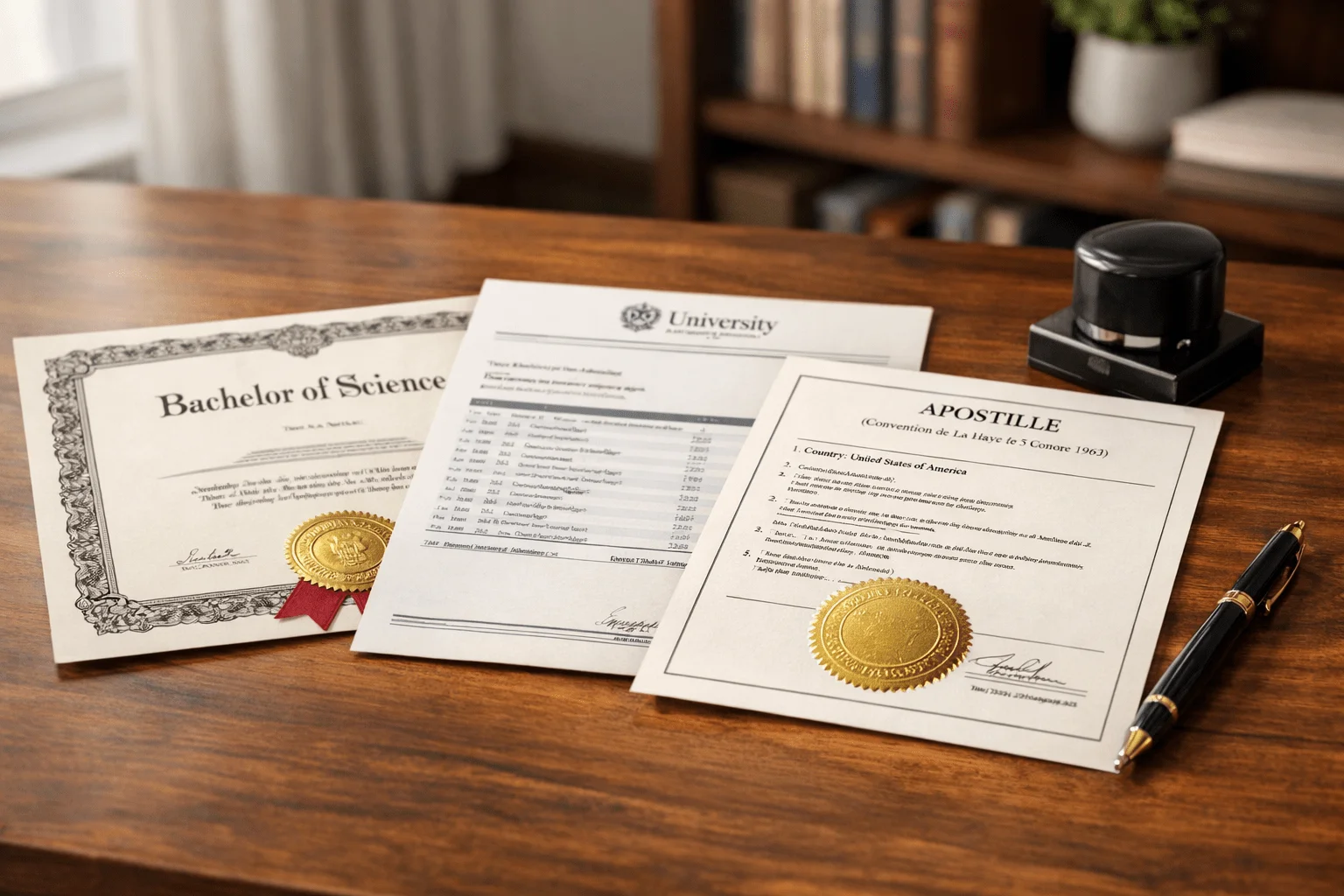
How to Get an Apostille for Academic Records
A minor detail can make or break your plans when having academic records authenticated for foreign use. Whether pursuing further study or starting a career overseas, securing an apostille is the optimal method to prove a document’s authenticity. This article cuts through the confusion to show how to obtain an apostille for academic records, so your hard-earned credentials are recognized on the global stage without problems.
Understanding Apostilles for Academic Records
The apostille certification validates the origin of a document. Before sending your educational qualifications abroad, many foreign authorities require them to be verified first. Without an apostille for school documents, you might encounter legal barriers outside the U.S. as your paperwork gets rejected.
When Schools and Institutions Require Apostilled Academic Documents
You’ll likely need to present apostilled credentials to a university, employer, licensing board, or immigration office in a country that signed the Hague Convention. Typical scenarios include transferring credits to a foreign school, securing a work visa or permit, and seeking professional licensure abroad.
Types of Educational Records Commonly Apostilled
Most documents issued by accredited institutions can be apostilled, provided they meet state standards. The most frequently authenticated items include:
- Diplomas
- Official transcripts
- Enrollment letters
- Degree verifications
Foreign authorities rely on these records to evaluate your academic background. Therefore, it’s crucial to ensure they’re properly prepared for apostille processing.
How to Prepare Academic Records Before Requesting an Apostille
The most important factor of a successful apostille request is submitting correctly prepared documents. Sending the wrong version of educational paperwork is the most common mistake. To secure an apostille for university records, start with these three critical checks before submission.
Getting Official Copies or Certified School Records
Most states require official copies or certified records issued directly by the school’s registrar or student records office. This means photocopies, scans, or print-outs won’t qualify. Instead, you must order documents bearing an original signature and an official school seal or stamp acceptable to the issuing state.
When Notarization Is Required for Educational Documents
Certain documents need an extra step of notarization before they can be apostilled. If your state asks for notarized records, ensure you inform your school office of this requirement. In this case, a designated official from your institution signs the document in front of a public notary, confirming its validity.
Verifying the School’s Accreditation and Eligibility for Apostille Processing
As part of preparation, double-check that your academic institution is accredited within the state. Apostille offices will reject requests for authenticating records from non-recognized schools. Additionally, an online degree from an institution based in another state may not be eligible for an apostille from your state.
Where to Submit Educational Documents for an Apostille
Navigating where your apostille request must be directed is pivotal. For those seeking an apostille for diplomas and transcripts from state institutions, the right path leads to a state office. On the other hand, there are exceptions to be aware of, and the correct destination depends on who issued your record.
Determining Whether the Document Requires State or Federal Processing
Any documents issued by state-regulated schools, such as public universities, private colleges, and high schools, must be authenticated at the state level. However, if your document originates from a federally operated institution, which is extremely rare for academic records, it would be processed through the DOS.
How State-Level Apostilles Handle School-Issued Records
Once your educational document has been certified or notarized, the Secretary of State’s office, or an equivalent authority, usually handles the authentication. While each state might have its unique rules, the process involves verifying the signature and seal of the school official and then attaching the apostille certificate.
When Third-Party or Digital Verification Services Are Involved
Sometimes, schools utilize third-party platforms, such as the National Student Clearinghouse, to generate academic transcripts. If this is your case, the state office may require you to have your digital document certified by the verification service’s officer instead of the school’s. Check with your state to confirm that the service is recognized as a certifying entity and submit an order to the right place.
Step-by-Step Process for Obtaining an Apostille for Academic Records
Getting an apostille for your academic records becomes straightforward when you follow clear, guided steps. Here’s how to accelerate from document preparation to final approval without the usual complexity of government procedures.
Step 1: Confirm the Correct Version of Your Academic Document
Kickstart by confirming the exact educational paper the receiving authority needs. Then, contact your institution directly and inquire about how to obtain the specific version of academic paperwork.
Step 2: Complete Any Required Notarization or School Certification
Some documents must be notarized or certified by a school official before being eligible for the apostille. Ensure the notarization or certification is properly executed, allowing the apostille authority to validate legitimacy.
Step 3: Submit to the Appropriate Apostille Authority
Once you have prepared your apostille package, submit it to the correct state or federal authority. Most of the time, it would be the Secretary of State’s office in the state where your academic institution is located.
Step 4: Receive, Review, and Prepare the Apostilled Document for International Use
After approval, receive the apostilled document and review all names, dates, and signatures immediately. Keep it in a safe place before forwarding it to the next destination overseas. Now, your U.S. credentials are accepted globally.
Common Issues That Delay Apostilles for Academic Records
Small oversights can slow down the process even if you follow the general steps. Staying aware of these frequent issues helps you avoid unnecessary hold-ups in authenticating academic credentials.
School Records Not Properly Certified or Signed
The most common pitfall is submitting a document without an original certifying signature. A record signed by an unauthorized official or without the school’s raised seal is often rejected. Copied or scanned signatures are also returned unprocessed.
Notarization Errors on Transcripts or Diplomas
Errors with notarization, such as incorrect wording or an expired commission, can invalidate the submission and cause delays. Educational documents must follow state-specific rules, having clear and legible notary signatures and seals.
Submitting Documents to the Wrong State or Agency
Apostille requests are to be processed in the state where the record originates. Sending a UCLA degree to the Texas Secretary of State for an apostille will result in an automatic rejection. Confusing state-level and federal requirements also leads to time-consuming resubmissions.
Using Unofficial or Unverifiable Copies
Apostille offices can’t authenticate self-print transcripts from student portals or uncertified photocopies of university degrees. Only official copies with verifiable signatures are eligible, so always confirm that your records meet these standards.
Tips for a Smooth Apostille Process for Educational Documents
A few strategic moves can improve your experience, whether you’re securing an apostille for transcripts, diplomas, or other school-issued paperwork. Keep these proactive tips to make the process faster and less stressful.
Request Extra Certified Copies from Your School
Schools need time to generate certified records, so getting multiple copies upfront is a lifesaver. This helps if your document, unfortunately, gets lost in transit, or you plan to send it to more than one country.
Check International Requirements Before Applying
Rules vary among destination countries—some may require certified translations or specific formatting. Reviewing these details with the receiving institution overseas ahead of time ensures your flawless apostille won’t be rejected then.
Allow Enough Processing Time for School and State Offices
Avoid scrambling at the last minute by building in a buffer for each step. Registrar’s offices may take 7 business days to fulfill transcript requests, and notarization also adds to this timeline. Consider busy seasons — graduation, for example — and start the process at least two months before the final deadline.
Consider Professional Apostille Services for Multi-Document Requests
If you’re working on several documents or facing a tight schedule, a professional service might give you the most advantages. At EZ Apostille, our experts handle the intricate details, state submission, and follow-ups, transforming a logistical ordeal into a streamlined authentication journey from start to finish.
A Final Word on Academic Record Apostilles
Obtaining an apostille for academic records is crucial to making your U.S. credentials globally recognized. With the right guidance, careful organization, and being cautious of missteps, you’re ready to chase your dreams across borders with confidence.
If you’re ready to move forward or need clarification at any step, contact EZ Apostille, and we’ll help you navigate the apostille process with confidence.
FAQ
We’ve received many queries about apostilles for school documents. These quick answers will make it simpler to get started with document authentication.
Do U.S. schools apostille documents directly?
No, schools don’t issue apostilles; instead, they provide certified records, which you can then submit to the state or federal agency for the apostille.
Can digital diplomas or transcripts be apostilled?
In most cases, digital diplomas or transcripts must be converted into certified printed copies before they can be apostilled. Acceptance of electronic records depends on state rules.
How long does a typical academic record apostille take?
The timeline varies by state, but it’s best to prepare early and account for both school certification and state processing times.
Can I apostille records for a school I no longer have access to?
Yes, as long as the school is still in operation. You should contact the registrar’s office or work with a trusted agency to order certified copies of your paperwork.
Do academic records expire for apostille purposes?
No, academic records don’t expire, but the receiving country may prefer freshly issued certified copies.
Related Posts
FBI Background Check for Bulgarian Residency: What U.S. Applicants Need to Know

Getting Married Abroad: U.S. Documents Couples May Need