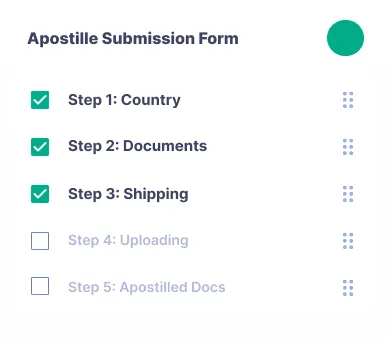
When life takes you across borders, your document needs a Nevada apostille to travel with you. That’s where apostille services in Nevada become indispensable, whether for education, business, or family affairs. EZ Apostille is here to transform what seems like a headache into an effortless, reliable solution. With our guidance, you can fast-track the apostille process in Nevada and get your document certified for the global stage without the usual hassles.
Understanding how the Nevada state apostille works is the very first step to making your paper recognized abroad. Simply put, the apostille is an official endorsement assuring foreign authorities of its legitimacy. Let’s explore all you should know about this golden stamp.
Eligible Nevada Documents for Apostille
Not every official paperwork qualifies for an apostille, and Nevada typically processes two main types of documents. They are:
- State-issued public records
These include documents that originate from Nevada state agencies and bear an official signature and seal. Examples are birth and marriage certificates, divorce decrees, court judgments, and business registrations. - Notarized private documents
The apostille also applies to papers created privately, provided that a Nevada-commissioned notary public witnesses the signing. This category includes powers of attorney, affidavits, authorization letters, commercial contracts, and other signed agreements.
Before submitting to the state office for apostille processing, each document must be certified or notarized, depending on which category it falls into.
Nevada’s Apostille vs. Certification Rules
The Nevada Secretary of State issues apostilles in adherence to the international standards set by the Hague Convention. This makes your paperwork legally valid in participating countries without federal authentication and embassy legalization.
If your document is destined for a non-member destination, the state authority will issue a certification instead. The full authentication chain involving multiple verification layers is required in this case. Distinguishing between apostilles and certifications allows you to save time and uphold compliance.