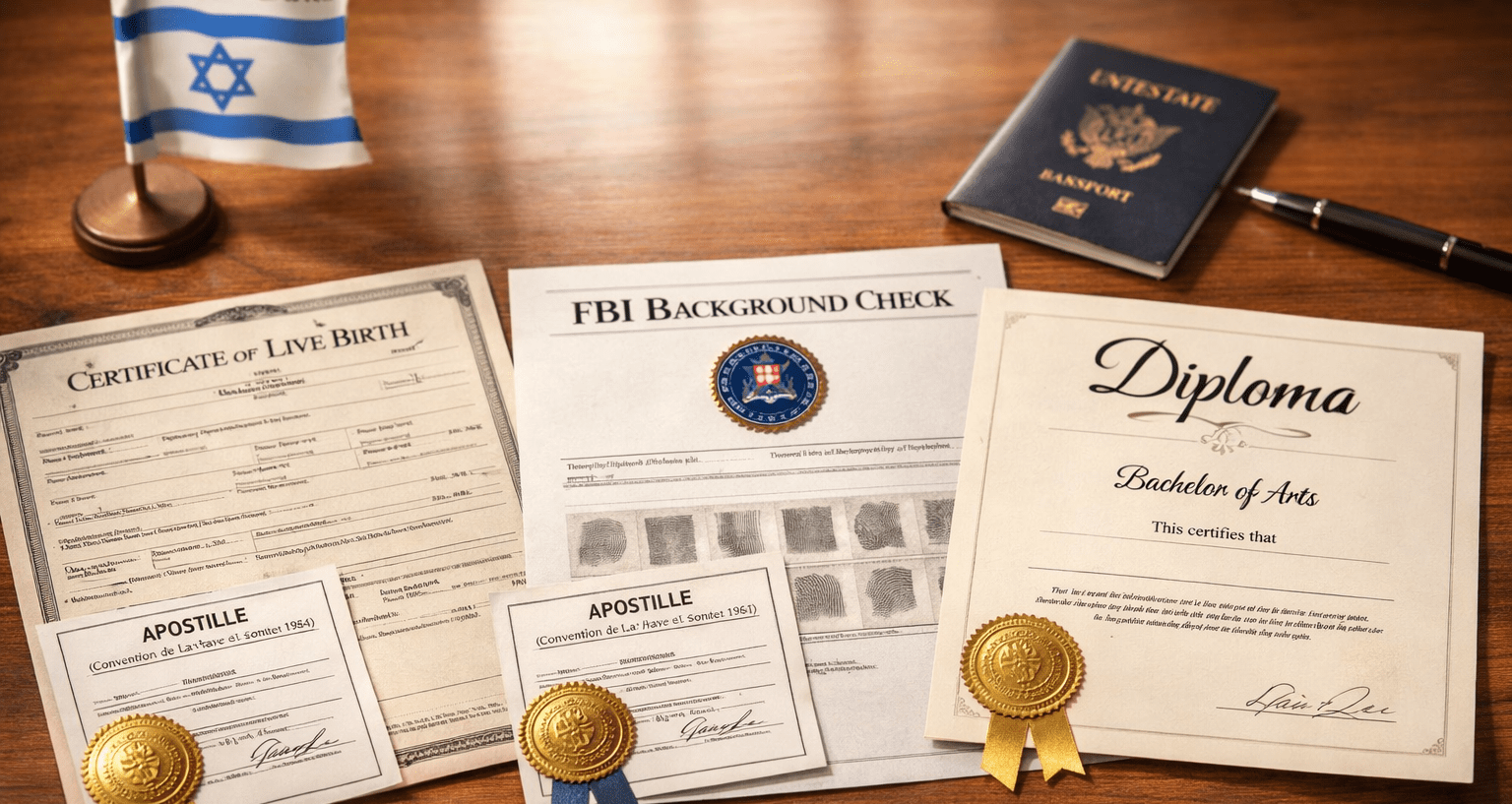
Document Apostille for Israel: What You Need to Know
Moving to Israel and starting a life there is within reach, but it often comes with a mountain of paperwork. Before Israeli authorities recognize your U.S. documents, they’ll need proof of authenticity first. That’s why getting proper authentication opens the doors to everything, from visa approval to work opportunities. Apostille services for Israel help leave the stress out of the picture, turning a demanding task into a clear, manageable checklist for your new beginning. Here’s how the process works.
Why an Apostille Is Required When Moving to Israel
When relocating to another country, foreign authorities require domestic records to carry international approval for legal recognition. It’s the same for Israel, which requests an apostille to affix most public and private documents, such as vital records and powers of attorney. Without this golden stamp, your residency application or legal proceeding might be stalled as essential paperwork is deemed invalid, making an apostille for Israel indispensable for your global endeavor.
Documents You May Need Apostilled for Israel
The specific documents you’ll need depend on the purpose of your relocation, but being well-prepared is the rule of thumb when moving to Israel from the U.S. The Israeli government typically asks you to submit authenticated paperwork to verify your identity, background, or qualifications. Below are the main categories of documents that you should apostille before use.
Personal Civil Status Documents
Records establishing your identity and family status are required for visas or marriage registrations. Consider apostilling the following for smooth recognition:
- Birth certificates
- Marriage licenses
- Divorce decrees
- Death certificates of family members
These documents must be certified copies obtained from the issuing agency, such as the state’s health department or a county clerk’s office.
Citizenship & Immigration-Related Documents
This group of paperwork includes those that directly tie to your immigration eligibility. To enter and reside in Israel, applicants often apostille:
- Certificates of naturalization
- Immigration approval notices from Israeli agencies
- Medical examination reports
Since requirements might be nuanced by case, always confirm the exact list of documents you have to provide for your citizenship or residency applications.
Police & Background Documents
A clean criminal record is commonly required when applying for a work permit. For Israel, this category includes:
- FBI background checks
- State police clearances
- Local criminal reports
These records often have limited validity, around 3 to 6 months. Hence, timing is critical, and you must ensure the document age meets the recipient’s requirements.
Education & Professional Records
Academic and career credentials must be apostilled if you plan to study or work in Israel. Many have the following validated for foreign use:
- Diplomas and transcripts
- Professional licenses
- Employment reference letters
Before apostille processing, these records must be certified and/or notarized by the educational institution’s registrar or the company’s authorized representative.
Legal and Supporting Documents
This group comprises a large number of documents that demonstrate your legal or financial standing. Depending on your situation, you may need to apostille:
- Powers of attorney
- Court orders and judgments
- Adoption papers
These documents provide legal clarity and help prevent disputes or complications during your relocation to Israel.
Preparing Your Documents Before Apostille
The apostille process for Americans moving to Israel always begins with meticulous document preparation. Each piece of paperwork must fulfill the state or federal standards for the apostille, as well as Israeli translation requirements. Here’s what you need to consider before filing your apostille request.
Identifying the Issuing Authority
Start by confirming which agency issued your document. The place of issuance determines whether you’ll need a state-level or federal apostille. Birth certificates from Florida, for instance, must be authenticated by the Florida Secretary of State’s office. An FBI background check is apostilled by the federal agency, which is the DOS. Knowing the issuing authority ensures your request is sent to the right office.
Notarization Requirements
Private documents, such as affidavits and powers of attorney, must be signed in front of a state-commissioned notary public. Notarization is applied to all paperwork without an official signature. Always check if notarization is mandatory for your record and have it properly notarized, if necessary.
Translation Requirements for Israeli Authorities
Israeli officials often demand certified translations into Hebrew for documents in English. While U.S. apostille offices do not require translations, you should confirm whether the receiving authority in Israel expects the translation to be completed before or after the apostille. In most cases, the apostille is applied to the original document, and the certified translation is submitted alongside it when the paperwork is presented for official use.
Step-by-Step Apostille Process for U.S. Documents Used in Israel
Precision plays a central part in document authentication for Israel, where each step depends on the previous one. This step-by-step breakdown will allow you to visualize and execute the apostille process efficiently from start to finish.
Step 1: Confirm the U.S. Document Type and Issuing Authority
As mentioned, the first step is identifying the exact document type and the authority that issued it. State-issued records must be filed with the Secretary of State’s office in the same jurisdiction, whereas federal papers are authenticated through the DOS.
Step 2: Prepare the Document for Apostille
Gather the document in its required format, typically a certified copy or a notarized original. For example, a marriage certificate must be certified by the vital records office, while a commercial agreement must be notarized to qualify. Also, pay attention to the age requirements and obtain the most recent version if possible.
Step 3: Apostille U.S. Documents for Use in Israel
Once your apostille package is ready, submit it to the appropriate state office in the issuing state or the DOS in case of a federal apostille. Submission methods vary by state, but most involve completing a request form and paying the processing fee in advance. Walk-ins and expedited or same-day services might be available for urgent needs, depending on the location.
Step 4: Apostilling Digitally Issued U.S. Documents
If your state offers e-Apostilles, you may be able to submit a digitally issued document through an official secure platform for authentication. This option can be faster and more convenient than traditional paper processing. However, acceptance of e-Apostilles may vary depending on the receiving office in Israel. For states that only process physical copies, you’ll need to request a paper version of the document from the issuing institution before submitting it for apostille.
Step 5: Check Apostille Validity for Israeli Immigration
Finally, confirm that the apostille is securely attached to your paperwork and that all details are clear and legible. Once issued, the apostille allows your document to be recognized in Israel without additional legalization. You can then bring the apostilled record with you or send it by mail to the requesting office as required.
Processing Times and Costs
For a U.S. citizen moving to Israel, processing times and costs may vary dramatically. The reason is that each authentication office has its own timeline, procedure, and fee charged per document. That said, you should plan at least 2 weeks for state processing alone and budget $5 to $20 for the standard government fee. Trackable shipping, expedited options, and professional handling also add to the final cost of your apostille.
Common Apostille Issues for People Moving to Israel
Beyond careful planning, successful document authentication for Israel entails avoiding potential missteps that can disrupt the verification chain. Be conscious of the following common mistakes to dodge unexpected delays that could compromise your relocation.
Incorrect Document Versions
Submitting an outdated version or unofficial copy is a guaranteed roadblock. For instance, many think that a hospital-issued birth record is the same as the state-certified one, and this often leads to rejection. Always check if you have the correct document version before requesting an apostille.
Apostille Rejection by Israeli Authorities
Foreign officials can reject an apostille if it appears incomplete, improperly affixed, or damaged. Additionally, the unique reference number on your apostille must be clear and verifiable as well. Remember to double-check every detail on the apostille certificate before sending your document abroad.
Last-Minute Immigration Delays
Underestimating processing time and waiting until the last days of relocation to request an apostille is the most common mistake people make. Missing important deadlines for visa approvals, residency permits, or citizenship applications may put a halt to your entire relocation plan. Starting early ensures seamless, stress-free processing, giving you total control during your international move.
Using Professional Apostille Services for Relocation
Engaging expert assistance makes relocation to Israel far easier than navigating official procedures alone. EZ Apostille provides apostille services for Israel by preparing documents, managing government submissions across varying state regulations, and coordinating timely issuance. For applicants working with tight deadlines or complex requirements, professional support helps ensure the process moves forward smoothly and without unnecessary delays.
Your Israeli Journey Starts Here: Apostille with Confidence
Now, with this comprehensive guide for moving to Israel, you can move forward with confidence that your paperwork will be accepted without issues. By understanding the requesting authority’s requirements, paying close attention to preparation, and respecting critical timelines, you’ll secure this essential validation.
FAQ
We’ve gathered the most pressing concerns about apostilles for Israel, and below are our answers to them:
Do I need to apostille documents before arriving in Israel or after?
It’s highly advisable to obtain apostille certification before arriving in Israel. Moreover, you likely need to present authenticated paperwork when applying for a visa, so starting early is necessary.
Will Israeli authorities accept apostilles issued years ago?
Older apostilles might be accepted because the apostille technically doesn’t expire. However, time-sensitive documents, like FBI background checks, have a short validity window, and they will be denied by Israeli authorities when they become outdated.
Are apostille requirements different for Aliyah vs residency permits?
The apostille process is similar for both, but the specific list of documents can differ. Aliyah may require more personal and religious records compared to a regular residency permit.
Can family members use the same apostilled documents?
Shared records, such as a marriage certificate, can be applied to both spouses for a joint application. Apart from that, each individual should have their own authenticated set of personal documents.
What happens if a required document is missing an apostille?
Without an apostille, the document is considered invalid. If it’s crucial to an immigration procedure, your application will be denied, requiring you to obtain an apostille and resubmit it.
Do I need a separate apostille for Hebrew translations?
No. The apostille certifies the document it is attached to. The Hebrew translation is typically certified separately and submitted together with the apostilled original to Israeli authorities.
Related Posts

Bill of Sale Apostille: The Easy Guide for International Transactions
Out-of-State Apostille: Can You File in a Different State?