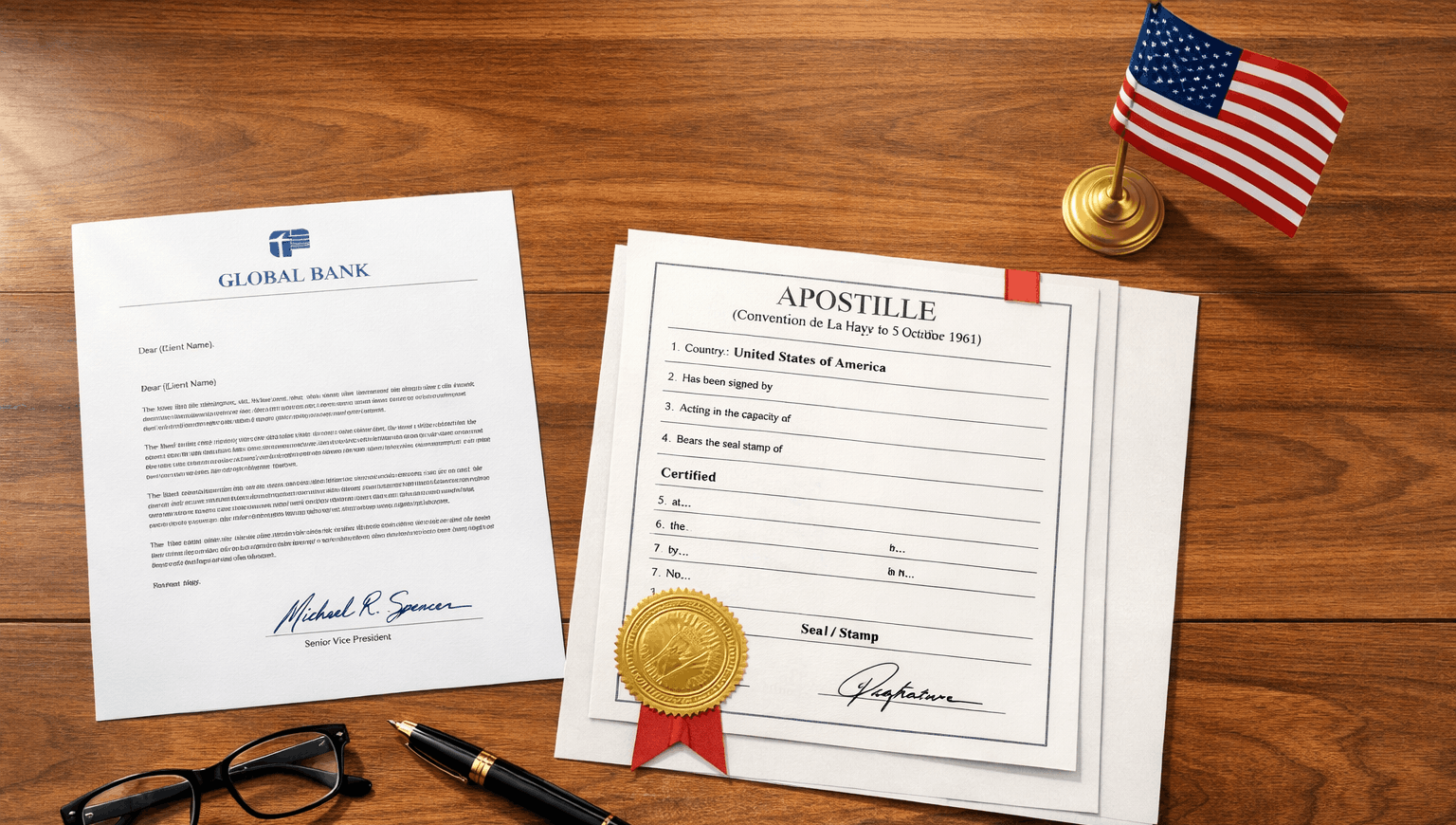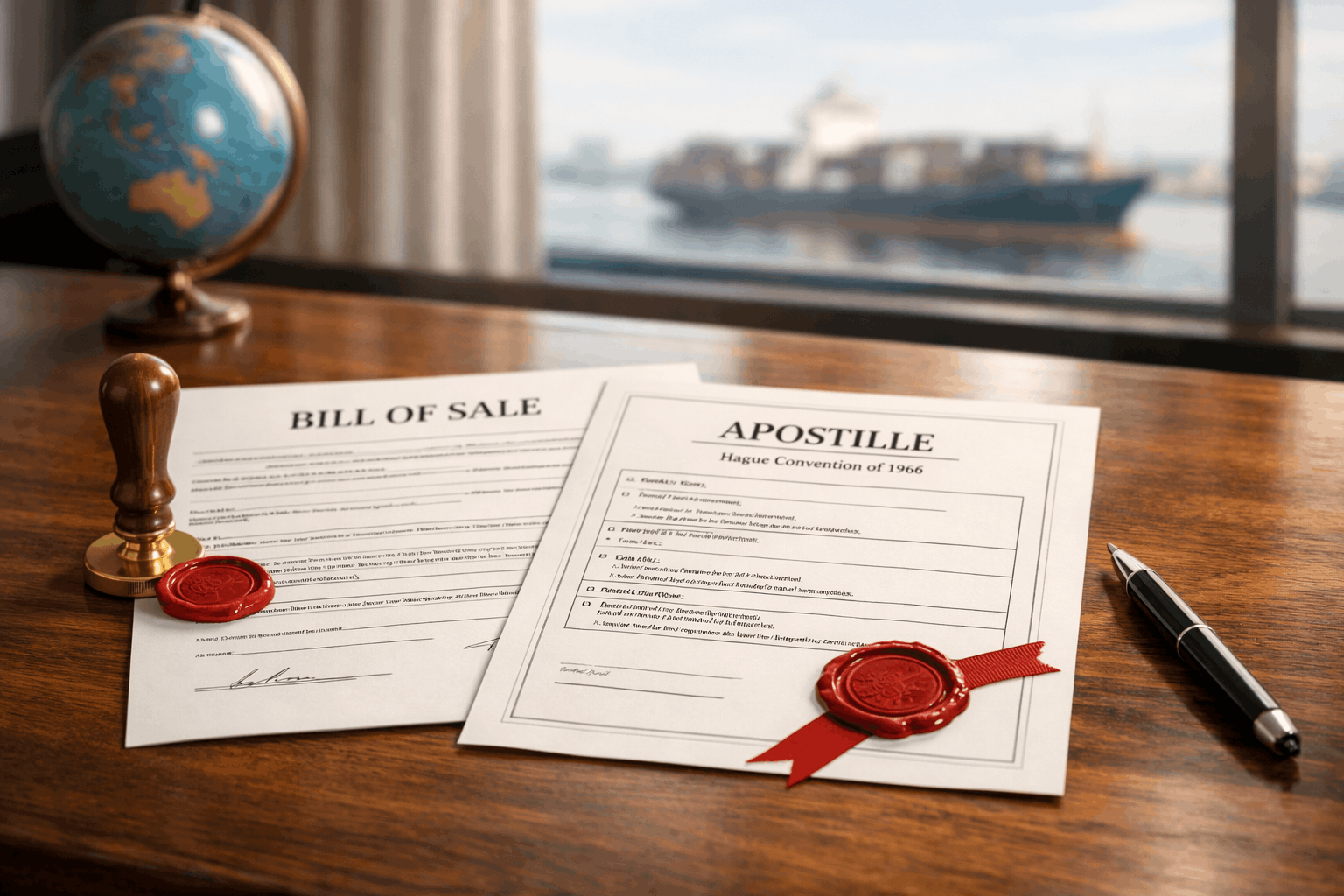
Bill of Sale Apostille: The Easy Guide for International Transactions
When a business deal goes global, you’ll likely need to have the paperwork authenticated for foreign acceptance. Oftentimes, a bill of sale is the key document that records an asset’s change of title. To make the transaction legally valid overseas, obtain an apostille for the bill of sale before the cargo ship departs. This guide gives you a straightforward roadmap to securing this stamp of approval for your sales document to enter a foreign legal system.
What Is a Bill of Sale?
A bill of sale is a formal document that serves as proof of ownership transfer for a property. More than just a receipt, it’s legally binding and includes details about the transaction, such as the item description, purchase price, and parties involved.
The main purpose of this paper is to establish a clear record of ownership, protecting both the buyer and seller from disputes and meeting regulatory requirements. In the context of foreign trade, it turns into a critical piece of paperwork for officials to assess the legitimacy of ownership, determine import duties for cross-border asset transfers, and ensure customs clearance for entry.
When Do You Need a Bill of Sale?
You might be holding one right now without realizing it. That’s why understanding when you need a bill of sale is crucial before getting it apostilled. Governments, customs officials, and foreign buyers often require this document as evidence of a property transfer. Let’s look at some common scenarios.
Exporting Vehicles or Watercraft
If you sell your personal motorcycle, car, or boat to a buyer overseas, a bill of sale is often mandatory for export documentation. Authorities use it alongside title documentation to confirm a lawful transfer of ownership. Your buyer can also use the bill to register it with foreign vehicle departments.
Selling Industrial Equipment Overseas
Manufacturers and construction firms usually transfer used machinery, tools, and equipment to international buyers. Think of tower cranes, press machines, and packaging lines. A bill of sale backs these transactions, allowing foreign entities to verify the value of goods for transportation, insurance, and registration purposes.
Transferring Business Assets to Foreign Buyers
When companies sell their current assets — such as office furniture, technology, or an entire division — to an overseas business, a bill of sale is essential to ensure transparency. It offers a legal trail that facilitates accounting, taxation, and compliance in both jurisdictions.
Supporting Customs and Import Procedures
Last but equally important, even when the buyer doesn’t need a bill of sale to register the newly acquired property, customs agencies almost always request it to verify the value of the shipment. They look at the listed price to calculate tax obligations before the goods enter the country. Without it, shipments can be delayed or rejected at entry, causing complications for sellers and buyers alike.
Which Bills of Sale Qualify for the Apostille?
To request an apostille for a bill of sale, you can’t simply scribble something on a piece of paper and expect approval. It must meet certain criteria concerning origin and execution to become eligible for international authentication. Here are the primary categories of paperwork that can be validated with an apostille.
Notarized Private Agreements
A privately created bill of sale typically qualifies for a state-level apostille if it has been properly notarized in the respective jurisdiction. The notary confirms the identity of the individuals signing, witnesses the signatures, and attaches their statement. The notarized bill can then be authenticated for international use.
Corporate Asset Transfer Documents
A corporate bill of sale is usually printed on letterhead, signed by a company representative, and includes a corporate seal. This type must also be notarized before the apostille, where a company’s authorized officer signs the bill in front of a notary. Only then does it carry the official weight during the apostille process.
State-Certified or Government-Issued Documents
Bills of sale originating from a state agency for vessels such as yachts or commercial boats are often automatically eligible for the apostille. Since they come directly from the government, they are naturally certified and don’t need notarization at all. You may request an apostille immediately if you have a state-issued or certified bill.
Electronic vs. Physical Signatures
Many bills of sale today are digital with electronic signatures. Though they’re widely used domestically, they might be rejected for international authentication in states that have yet to issue e-Apostilles. In most cases, only physical signatures witnessed by a notary public are acceptable, so confirm this before submission.
Step-by-Step Process to Obtain an Apostille for a Bill of Sale
Once you understand what a bill of sale is and whether you need it apostilled for your overseas transaction, let’s continue to explore the apostille process step by step. Like any other paperwork, obtaining an apostille can be a rigmarole if you don’t know the order of operations. Here’s exactly how you should move.
Verify Document Format and Execution
First things first, check that your bill of sale is properly prepared for apostille purposes. It must contain all the essential information — identities of the seller and buyer, item sold, and value of sale. Most importantly, verify if the signature meets the current standards outlined by your apostille office.
Arrange Proper Notarial Certification
Most bills of sale are considered private, thus must be notarized to fulfill the apostille requirements. A notary confirms the validity of signatures and acknowledges that the parties have signed the bill willingly. Missing this step, the officials can’t proceed with issuing an apostille certificate.
Submit to the Appropriate Competent Authority
Each U.S. state has a designated office for authentication, typically the Secretary of State. You’ll submit the bill of sale to the correct authority, along with a request form/cover sheet, adequate payment that covers the processing fee, and a prepaid envelope for return shipping if you choose to have the apostille mailed back.
Receive and Attach the Apostille Certificate
The state office attaches an apostille certificate to your original document once they’ve verified its authenticity. With this, your bill of sale gains instant recognition in countries that are part of the Hague Convention. You may scan it for your records and forward the original to your buyer or forwarding agent.
Processing Time and Cost Expectations
The average time it takes to apostille a bill of sale varies by state, but it usually ranges from 5 to 15 business days. If you’re pulling an all-nighter to meet an international deadline, rush services are often available to cut that wait down to 1 to 3 business days in some jurisdictions.
As for costs, the budget may differ depending on the state authority and whether you engage professional assistance. Most state filing fees are between $5 and $25 per apostille, plus any notarization fees and delivery charges you paid upfront. Remember to check the latest fees on the state website before submitting.
Ready to Apostille Your Bill of Sale?
Solid paperwork is the backbone of trust in international trade. A bill of sale tells the story of who owns what, and adding an apostille ensures that narrative is trustworthy to foreign authorities. Whether you’re selling heavy machinery or a beloved vehicle, following the right steps helps you close the deal with a handshake rather than a headache. If you still don’t know where to start, leave us a message for expert guidance.
FAQ
Are you staring at your bill of sale and scratching your head? You’re not alone. Here are short answers to some of the most common concerns about the bill of sale apostilles.
Can a handwritten bill of sale be apostilled?
Yes, if it’s legible and properly notarized. The law doesn’t require it to be typed for apostille processing. However, it must meet the same requirements, such as having a clear description of the item, the price, and a verifiable signature.
Does the buyer need to sign for apostille purposes?
Not usually. In most cases, the seller’s notarized signature is sufficient for apostille purposes. The apostille authority verifies the notary’s signature and seal — not the transaction itself. While a buyer’s signature can add contractual clarity, it is typically not required for authentication.
How do I know if the destination country accepts an apostille?
By checking the Hague Convention membership status of your destination country. If it’s a member, you can use an apostille there. If not, you may have to undertake a longer authentication path called legalization.
Is translation required for foreign submissions?
Yes, a translation may be necessary if the receiving country requires the underlying bill of sale to be translated into the local language. Check with the requesting authority directly to prepare a certified translation before submitting your apostille application.
Can corporate bills of sale be apostilled without company formation documents?
Yes, corporate bills of sale can be authenticated as standalone documents. The apostille office validates the attached notary jurat and doesn’t typically have to see the company formation documents during this process.
What happens if the destination country rejects the apostille?
If rejection happens, you may contact the receiving authority for clarification. Provide additional supporting documents when necessary to support your case. In complex situations, it’s best to consult with a trusted expert agency to ensure your bill of sale is accepted abroad before shipping anything valuable.
Related Posts
Out-of-State Apostille: Can You File in a Different State?
How to Legalize U.S. Documents for The Bahamas