Police Clearance in the U.S.: Which One Do You Actually Need?
Foreign authorities often ask that you provide a police clearance certificate (PCC) to relocate or apply for a job abroad. But which one do they mean when the U.S. doesn’t have a single, universal document to confirm someone’s criminal record status? With various types of background checks from different agencies, getting the wrong one can waste weeks of your valuable time. Let’s go through the essentials to determine which one fits your situation and avoid expensive setbacks.
What Is a Police Clearance Certificate
A police clearance certificate in the USA is an official statement confirming whether a person has a criminal history. Before chasing down this document, it’s crucial to understand what a clearance actually entails.
Purpose and Legal Use of Police Clearance Documents
Think of a police clearance as an individual’s proof of good conduct. It demonstrates that you don’t have a disqualifying criminal record to apply for a long-term visa, citizenship, employment, or other legal proceedings.
Information Included Depending on the Issuing Authority
It’s up to the issuing agency which information is disclosed in the clearance. A local police department may issue a short statement on letterhead, whereas the FBI produces comprehensive nationwide fingerprint-based results that can be listed in a multi-page rap sheet.
Distinction Between “No Record” and Criminal History Reports
A “No Record” certificate means that the issuing agency has found no criminal interaction under your name. In contrast, if a criminal history exists, the report provides an account of arrests, convictions, or sentences tied to your identity. Foreign governments typically expect a clean history as evidence of good conduct.
Situations That Require a U.S. Police Clearance
Many circumstances require people to present their U.S. police clearance. From immigration to employment, this formal certificate can open the doors to your next big opportunity. Here are the most common scenarios where you’ll need one.
Immigration and Visa Applications
If you’re applying for permanent residency, citizenship, or a long-term visa in another country, expect to submit a police clearance as part of your application. Many nations want proof that you’ve never committed a crime in the States before permitting you to stay, so a police certificate for immigration is non-negotiable.
Employment and Professional Background Checks
International employers, especially those in highly regulated fields, may request a police clearance to verify a candidate’s suitability for sensitive roles. Teaching or working in healthcare? You very likely need a clean record to obtain local licenses.
Requests from Foreign Governments and Authorities
Certain official procedures, such as registrations, adoptions, or social services, may ask for a police clearance. Be prepared to send your record to a foreign civil office, court, or registry following their instructions. In short, a criminal report lands on the checklist every time foreign officials want to confirm your conduct in the U.S.
Available Police Clearance Options in the United States
Again, there isn’t a universal police clearance certificate — instead, several types exist, each with its unique issuing authority, format, and purpose. Knowing the four distinct options you have helps you choose the right one for your case.
Local Police Clearance Letters
These letters come from your local municipal or county police department. They verify whether you have been arrested or charged on record with the given city or county. Getting such basic checks is fast because of their limited scope.
State-Issued Criminal History Reports
A state-level department or agency can provide a broader criminal report from offices within that state’s borders. Depending on the jurisdiction, you may request one from the Department of Justice or the Police Department using your ID and/or fingerprints.
Federal Background Check Through the FBI
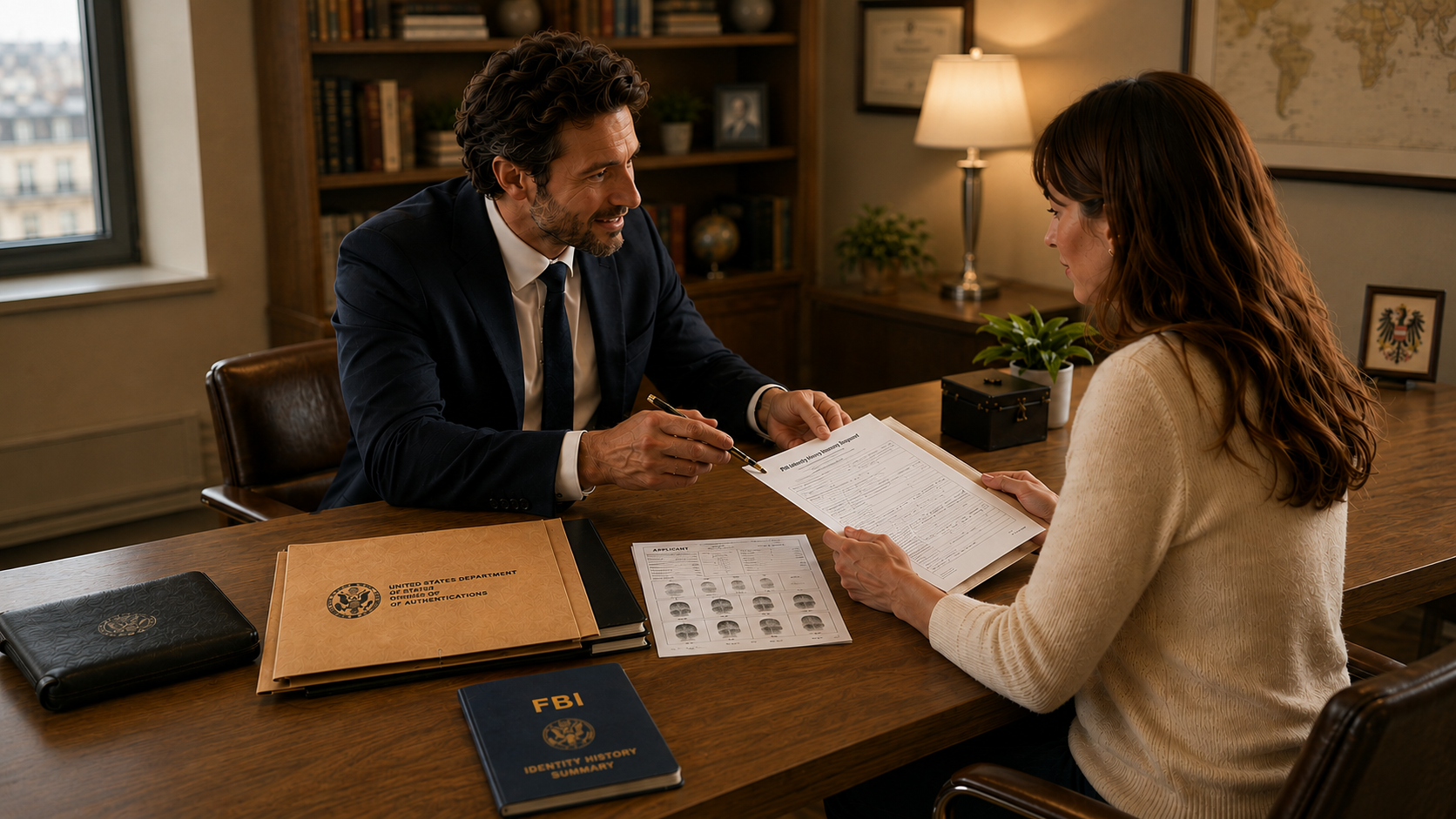
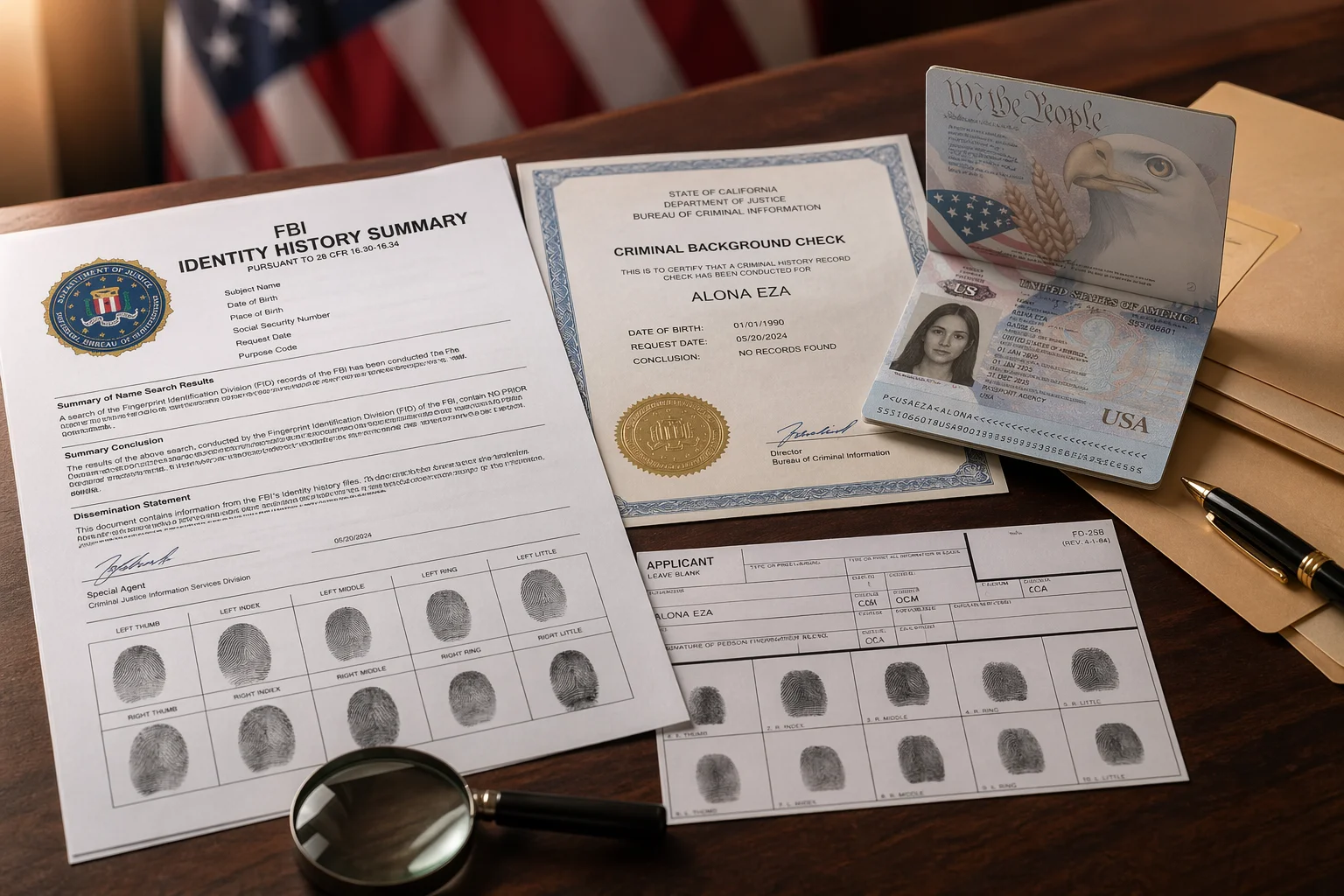
The FBI Identity History Summary Checks are the most comprehensive clearance, offering nationwide coverage. Your criminal history will be pulled from federal and state databases, making the FBI background report the preferred option for immigration and international employment purposes.
Certified Court Record Documents
When foreign governments require a closer review of a specific court case, they may request certified court records. These documents — such as official judgments, dismissals, and dispositions — come directly from the court that heard the case, providing the requesting authority with details about the proceedings.
Note that certified court records are typically requested in addition to — not instead of — a standard police clearance. They are rarely sufficient on their own for immigration or employment purposes.
Coverage Scope of Each Clearance Type
The scope of PCC — whether local, state, or federal — can determine if your certificate is accepted abroad. Many people are caught off guard by this, so understanding what your report covers can save you from unwelcome surprises later.
Jurisdiction Limits of Local and State Records
Local police clearance letters only reflect activities within that specific area. Crossing the county borders? No information will be found. Similarly, state-issued records cover incidents within that state. While useful within the U.S., these documents may not fulfill international requirements.
Nationwide Coverage in Federal Background Checks
An FBI background check is the most comprehensive available option, drawing from multiple databases. If foreign governments would like to know one’s full U.S. history, this national rap sheet is often what they’re after.
Limitations and Gaps Between Record Systems
While an FBI report provides the most extensive coverage, it isn’t perfect. The reason is that record systems aren’t always aligned, and state databases might not be updated immediately. This may cause a local arrest to not appear on the federal record at all, which is why some foreign authorities demand multiple clearances.
Selecting the Correct Police Clearance Based on Requirements
Now that you’ve seen all the options, how do you pick the right one? It isn’t always straightforward, but following a few principles can help ensure you submit the right document to satisfy foreign authorities.
Understanding Instructions from Requesting Authorities
Always read the instructions provided by the requesting authority carefully. Immigration offices, employers, and other government agencies are often explicit about whether they want a local, state, or federal clearance.
Matching Document Type to Destination Country Requirements
No country has the same standards. While China has been known to request FBI background checks, Canada might be happy with just a state-issued report. Research your destination country’s guidelines to ensure compliance.
Determining When Multiple Clearances Are Needed
When a single background check isn’t enough, authorities abroad may demand both a state report and an FBI rap sheet to get a full snapshot. This almost always happens if you’ve lived in several states over the past few years.
How to Get a Police Clearance Certificate
Let’s dive into the process of obtaining a police clearance certificate in the U.S. without running into dead ends. The good thing is that it follows a predictable pattern, though requirements vary depending on which agency issues the record.
Identifying the Appropriate Issuing Authority
First, figure out whether you need a local police letter, a state-issued report, an FBI background check, or a certified court record. The type of police clearance determines which authority you should reach out to.
Preparing Required Identification and Personal Information
Gather your valid photo ID (driver’s license or passport), proof of address, SSN, and personal details such as full name, date of birth, and any previous names used.
Completing the Application Form or Request
Fill out the request form provided by the appropriate agency. County police departments may use a simple application form, while the FBI has an online application portal for the Identity History Summary Check.
Submitting the Application Through Available Channels
Send the request through an approved channel, whether in person, by mail, or online, as instructed by the issuing authority.
Completing Fingerprinting and Identity Verification Steps
For state and federal clearances, be prepared to provide your fingerprints at a designated center or police station.
Receiving and Reviewing the Issued Certificate
Once processed, you’ll receive your clearance by mail or download from a secure portal. Check for accuracy and ensure it meets the requesting agency’s standards.
Processing Timeframes
The time it takes to obtain a police clearance certificate varies significantly. Generally, local police letters may be processed within a few days, while state-level reports take longer, often 1 to 2 weeks. For FBI rap sheets, direct submissions typically take 8 to 12 weeks. If you use an FBI-approved channeler, processing can be significantly faster — often 3 to 5 business days — though timelines may vary during peak periods.
Errors That Invalidate Police Clearance Documents
Beyond understanding how to get police clearance certificates, it’s equally important to be aware of potential pitfalls that can invalidate them. Here are the avoidable reasons that clearances become ineffective.
Incorrect Type of Police Clearance Submitted
Sending a local police letter when foreign governments ask for an FBI report is the most common mistake. Each record has a different scope and level of verification, so submitting the wrong type definitely results in rejection.
Incomplete or Low-Quality Fingerprint Submissions
For fingerprint-based criminal reports, it’s crucial to present complete impressions. Smudges or improperly rolled prints will cause delays or resubmission. Using an unauthorized fingerprinting service can also trigger a rejection notice.
Use of Unofficial, Edited, or Scanned Copies
Keep in mind that only original criminal background checks are accepted. Most foreign authorities don’t recognize photocopies, scans, screenshots, or any versions that appear altered.
Non-Compliance with Format or Authority Requirements
Many overlook certification, translation, and formatting rules. Does the authority require an apostille? Must the report be translated into the local language? Does it comply with data privacy laws? It’s best to consult the requesting agency early.
The Bottom Line in the U.S. Police Clearances
Now that you know what a police clearance certificate is and the different types you can get in the U.S., don’t let confusion derail your plan and choose the one that best fits the requesting authority’s requirements. Not confident enough to make the right selection? Contact EZ Apostille for dedicated support today!
FAQ
Here are some answers about police clearance certificates to give you a clearer picture.
Can a police clearance be rejected after submission to the authorities?
Yes, your clearance can be rejected if you submit the wrong type of report or if it fails to meet international standards — such as being expired, formatted incorrectly, or missing required authentication.
Do sealed or expunged records appear in background checks?
No, sealed or expunged records typically don’t appear in background checks. However, certain federal agencies or high-security clearance processes may still have access to this information depending on the jurisdiction and the nature of the original offense.
Are translations required for U.S. police clearance documents abroad?
It depends on the receiving country, but most foreign authorities require certified translations attached to the original English reports.
How long is a U.S. police clearance considered valid?
Most clearances are considered valid if issued within the past 6 months. However, some authorities abroad only accept those less than 3 months old. Always verify document age requirements with the requesting agency first.
Can an FBI background check replace state or local clearance?
Not always — since gaps exist, and certain agencies request state-level clearances in addition to the FBI rap sheet.
Can I use a digital copy for an official submission?
Maybe, but most foreign governments prefer ink-signed documents over PDFs. Specifically, if an apostille is required, it must often be physically affixed to the paper-based background check.
Related Posts
FBI Background Check for Bulgarian Residency: What U.S. Applicants Need to Know

Getting Married Abroad: U.S. Documents Couples May Need