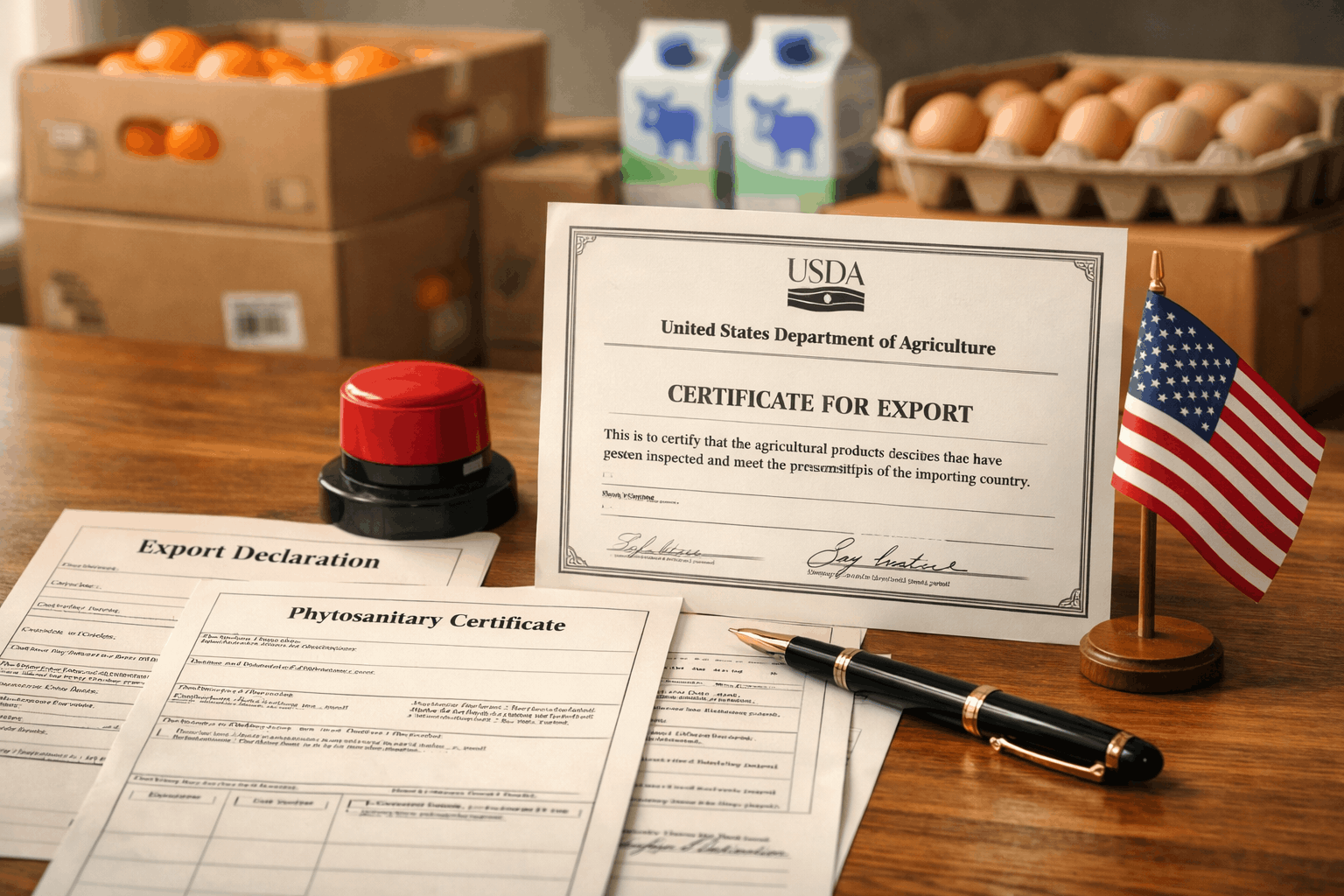
Apostille for USDA Certificate: Requirements and Process
When you’re in the business of exporting agricultural products, chances are you’ve heard of the requirements for official documentation from the U.S. Department of Agriculture. So, what is a USDA certificate, and why is it often required to be accompanied by a federal apostille? In this post, we’ll take a deep dive into how the USDA certificate apostille process works to ensure your products — whether dairy, poultry, or plants — comply with international trade standards.
When a USDA Certificate May Require an Apostille
To prove that agricultural products meet domestic standards before entering a foreign market, it’s essential to obtain USDA certificates early. More importantly, many countries don’t recognize these documents unless they’re authenticated. Two common paths to prepare them for foreign acceptance are as follows.
When the Destination Country Participates in the Hague Apostille Convention
If the importing country of your goods is a member of the Hague Convention, your USDA certificate must be apostilled to be valid abroad. This simplified method allows U.S. documents to gain international recognition without verification at foreign embassies or consulates. Over 120 nations are on the member list, including major importers such as Mexico, Germany, Japan, and the Netherlands.
When Foreign Authorities Require Authentication of USDA Export Documentation
An apostille isn’t sufficient for countries outside the Convention. Foreign customs or port authorities here typically require the USDA certificate to go through authentication by the U.S. Department of State (DOS) and then legalization at the receiving country’s consular office. In all cases, governments need assurance that your documentation carries legal weight before accepting it into their systems.
Common USDA Certificates Submitted for Apostille or Authentication
Obtaining an apostille for USDA certificates is crucial when exporting agricultural products internationally. But which certificates require authentication? To meet international food safety and trade regulations, authorities often require the following USDA documents to be apostilled or authenticated.
Dairy Export Certificate
When crossing international borders, dairy products often face some of the strictest regulations, as they directly affect the well-being of the people consuming them. Hence, whether exporting milk powder, cheese, or butter, you’ll need authenticated dairy export certificates to prove that your products are fit for human consumption. Without them, importers or foreign health administrations may reject the shipment.
Egg and Egg Products Export Certificate
From shell eggs to processed egg products, the egg industry relies on USDA export certificates to confirm that they come from eligible facilities and are processed under inspected conditions. Examples of these include the Certification of Shell Eggs for Export and the Egg Product Export Certificate of Wholesomeness.
Poultry Export Certificates and Verification Documents
The poultry sector also requires substantial export documentation, often involving verification of disease-free status and compliance with veterinary health and sanitary standards. Beyond these core certificates, some countries may also request additional verification, such as facility registration letters and inspection records.
Specialty Crop Export Certificates
Fruits, vegetables, and nuts are subject to stringent rules overseas and must travel with certificates that vouch for their quality, condition, and freedom from bio-threats to the destination’s ecosystems. Think of oranges from Florida and apples from Washington — the Fresh Fruit and Vegetable Grading Certificate verifies that they meet specific grade standards, ensuring safety and market value.
Authorities Involved in USDA Document Authentication
Before sending a document to any government agency, it’s best to determine its role in the USDA certificate authentication process. Each entity plays a distinct function, so knowing who does what prevents your paperwork from reaching the wrong hands.
USDA Agencies Responsible for Issuing Export Certificates
The record itself must come from within the USDA. Depending on the product type, certificates are typically issued by the Agricultural Marketing Service (AMS) for the grade and quality of dairy products and by the Food Safety and Inspection Service (FSIS) for processed meat and poultry. These agencies provide original paper certificates with signatures and seals needed for subsequent authentication.
Apostille and Authentication Issued by the U.S. Department of State
The U.S. Department of State Office of Authentications oversees the issuance of apostilles and authentications for USDA paperwork. This office reviews the signatures and seals on these federal documents and attaches a separate certificate directly to them, authorizing foreign use or preparing for the final step.
Embassy or Consular Legalization for Non-Hague Countries
Hague Convention member countries accept the apostille without question. If the destination isn’t a signatory to the Convention, the federally authenticated USDA document must be legalized by that country’s embassy in the U.S. Foreign diplomatic officials conduct a final review and add their own certification, allowing the product to pass customs and regulatory checkpoints in that country.
Step-by-Step Process to Apostille a USDA Certificate
The path to a fully apostilled USDA certificate follows a particular series of steps. To help you better understand what to do at each stage, let’s take a look at the clear breakdown of the process below.
Step 1: Obtain the Official USDA Export Certificate
Begin by ordering the specific USDA certificate required for your product. Depending on the receiving authority’s requirements, this may be an AMS grade certificate or an FSIS export certificate for processed meat. The key here is to ensure you obtain an original document with a valid USDA official’s signature. Note that scans or digital versions won’t be accepted for federal authentication.
Step 2: Verify Whether the Destination Country Requires an Apostille or Authentication
Once you have the USDA document, determine whether it needs an apostille or authentication. Again, this hinges on the importing country’s membership status in the Hague Convention. Some Hague-member countries also have additional requirements or specific instructions for certain agricultural products, so checking with the receiving authority directly can save you from pursuing the wrong path.
Step 3: Submit the Document to the U.S. Department of State
Next, complete the Request for Authentications Service form (DS-4194) and prepare your submission package. It should include the USDA certificate, official request form, appropriate payment, and a stamped return envelope with your correct address. Send your request by mail to the Office of Authentications in Washington, D.C., using a secure, trackable shipping method, or submit it in person.
Step 4: Receive the Apostille or Authentication Certificate
Once the federal office makes its decision, your document will be returned with the apostille or authentication securely affixed. For Hague countries, you may now send the apostilled USDA certificate directly to the requesting authority. For those outside the treaty, you must forward the authenticated paperwork to the relevant embassy or consulate for additional verification.
Processing Time and Costs for USDA Document Apostille
Regular processing time for mail-in requests at the DOS is approximately 5 weeks, and it may take longer during peak seasons. For those in a rush, expedited walk-in options are available, which shorten turnaround to 2–3 weeks. Appointments are extremely rare and reserved for life-or-death emergency cases only. It’s best to plan early when your shipments are time-sensitive.
Government fees start at $20 per apostille, plus professional handling and courier services, if applicable. In addition, certificates that require embassy legalization for non-Hague countries may later incur separate fees set by the foreign mission. Factoring in the timeline and expenses helps you schedule and budget more effectively.
Common Issues When Apostilling USDA Certificates
Exporters may follow the general process precisely, but eventually stumble over avoidable errors. Staying aware of these common pitfalls ensures a hassle-free experience when requesting an apostille for your USDA certificate.
Submitting Copies Instead of Official USDA Certificates
Many have the same misconception that a photocopy of the original should work. However, the federal office only accepts original documents bearing a verifiable USDA official’s signature and seal. Any other copies or reproductions are ineligible and automatically rejected, causing you to go back to square one.
Missing Federal Signatures or Agency Seals
Another issue arises when your original certificate somehow lacks a proper signature or an embossed/raised seal. These elements are crucial for authentication purposes, so the DOS can’t verify the certificate’s authenticity without them. Maybe the certificate arrives missing a signature entirely, or it’s too old that the seal becomes illegible — you must correct them before starting the process.
Sending the Document to the Wrong Authentication Authority
Finally, confusion happens when submitting the request to the incorrect authority. USDA certificates are federal documents and must be processed by the DOS, while state-level authorities handle local records only. Your Secretary of State will return your package unprocessed because they have no authority over federal records. That’s why identifying the correct apostille office from the beginning is decisive.
No More Guesswork in the Apostille Process
Bringing your USDA certificate to international acceptance is simple when you follow the sequential steps outlined above. By knowing which certification you need and where your request should go, you’re already ahead of the game. Short on time or unwilling to deal with bureaucratic paperwork? Contact EZ Apostille today for expert guidance on USDA certificate apostilles.
FAQ
Many first-timers still have lingering questions after reading the process. Below are answers to the most common ones we receive about apostilling USDA certificates.
Can a USDA certificate be apostilled immediately after it is issued?
Yes. A USDA certificate can be apostilled right away after issuance without any waiting period. We recommend reviewing the document first to confirm the signatures and seals are in place before submission to the federal office.
Do USDA export certificates require notarization before apostille?
No. USDA documents don’t need to be notarized, as they originate directly from a federal agency. The DOS instantly accepts them and verifies the federal signatures and seals against its database of official authorities.
How long is an apostilled USDA certificate valid for international use?
An apostille for a USDA certificate is valid indefinitely. However, foreign officials may require that the underlying certificate be recent. So, check for the certificate’s expiration date, if any, as well as the receiving country’s document age requirements before shipping.
Can multiple USDA certificates be apostilled in a single request?
Yes. You can submit several USDA certificates together in a single request for the apostille to save time and shipping costs. Each document will receive its own apostille, so you must make the exact payment covering the total processing fee.
What happens if the destination country is not part of the Hague Apostille Convention?
For non-member countries of the Hague Convention, embassy legalization is the mandatory authentication method for U.S. documents. You must have your USDA certificate first endorsed by the U.S. Department of State. After that, the document, along with its attached authentication, must be forwarded to the appropriate embassy or consular office for final approval. The specific steps at this point vary by country, so you should stay up to date by checking the official website of the destination country’s foreign missions, as well as the foreign authority that requests your USDA certificate, for more detailed instructions.
Related Posts
FBI Background Check for Bulgarian Residency: What U.S. Applicants Need to Know

Getting Married Abroad: U.S. Documents Couples May Need