From the U.S. to Panama: Preparing Documents for Official Use
Dreaming of a new chapter overseas? Whether moving to Panama for residency or business, Panamanian officials won’t accept your U.S. paperwork as-is. This is when understanding the role of international document authentication becomes crucial. Today’s post will clear the uncertainty, create a smooth roadmap for your documents, and highlight how apostille services for Panama can make a difference.
Why Panama Requires Authentication of U.S. Documents
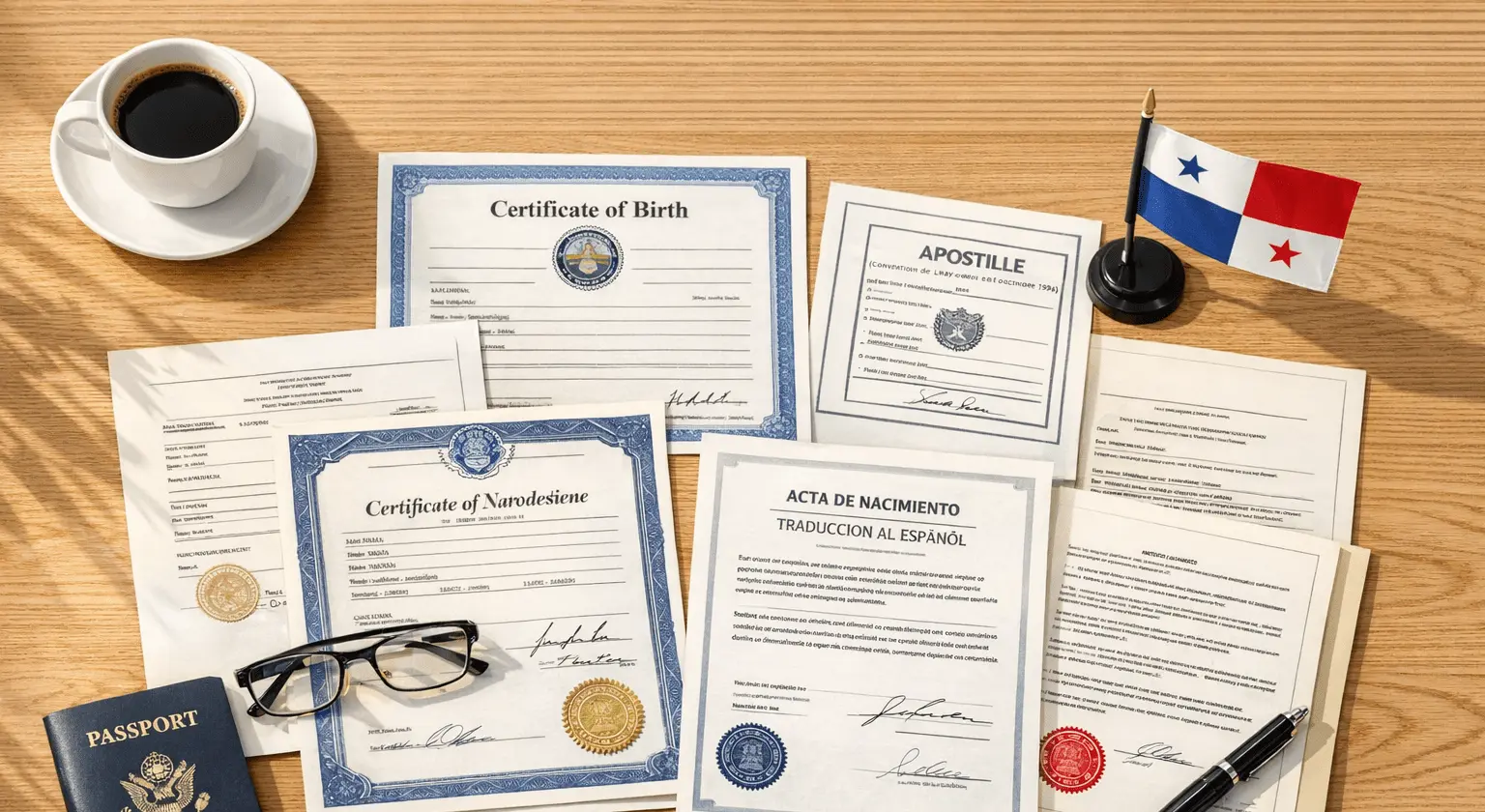
Like most countries, Panama requires foreign documents to be officially authenticated before they can be used for legal purposes within its borders. An apostille for Panama provides that essential seal of trust. It confirms that U.S. records, like birth certificates and corporate filings, are authentic and legitimate for use abroad. Without it, the receiving authorities might reject these documents to protect their legal system from fraud.
Apostille vs. Consular Legalization for Panama
Preparing documents for foreign use always starts with identifying which authentication method applies. For Panama, the streamlined apostille is typically recognized, but consular legalization might be relevant in certain cases.
Why Apostille Is the Standard Method for Panama
Since Panama is a member of the Hague Convention, the apostille is almost always the preferred solution. It certifies the origin of U.S. documents, including signatures, seals, and the official who issued them.
When Consular Legalization May Still Apply
As the traditional route, legalization is only required in rare circumstances for documents traveling to Panama. Examples are when your papers originate from a non-Hague country or when the receiving authority specifically requests extra verification. That said, this is the exception, not the rule, for Panama.
How Using the Wrong Authentication Method Causes Delays
Sending documents with the wrong type of authentication results in immediate rejection. Choosing legalization when an apostille is required forces you to restart the process from scratch and is often accompanied by additional fees or resources.
Types of U.S. Documents Commonly Submitted in Panama
Moving to Panama from the U.S. will involve presenting specific paperwork, depending on the purpose of your journey. These documents fall into the following four categories, each serving a distinct purpose in official procedures.
Civil and Vital Records
Documents that form the bedrock of personal legal identity are routinely required for residency, marriage, and family law matters. They include:
- Birth and death certificates
- Marriage certificates
- Divorce decrees
- Affidavit of single status
The above papers often need to be certified by the issuing state agency before being eligible for the apostille process.
Immigration and Residency Documents
For Americans moving to Panama, immigration paperwork is critical for visa or citizenship applications beyond vital records. Examples are:
- FBI background checks
- Police clearances
- Proof of income letters
- Medical reports
These help prove good status and financial solvency to Panamanian immigration officers.
Academic and Professional Credentials
Students and professionals often seek validation for their qualifications before moving to Panama. This group includes:
- High school or university diplomas
- Academic transcripts
- Professional licenses
Properly authenticated credentials ensure that educational or career achievements are recognized abroad.
Business and Corporate Documents
Companies expanding operations to Panama often have to submit corporate records as proof of their current U.S. standing:
- Articles of incorporation/organization
- Certificates of good standing
- Powers of attorney
Authentication of business documents grants legal authority and demonstrates corporate integrity to Panamanian regulators.
Preparing U.S. Documents Before Authentication
Your documents must meet certain foundational requirements before they can be apostilled for Panama. It’s important to pay attention to this preparation stage to avoid denial and save time later.
Original Documents vs. Certified Copies
An uncertified scan or photocopy will generally be disqualified. You must obtain the correct version of your paperwork: usually, the original for private documents, such as affidavits, or a certified copy for public records, such as birth certificates.
Notarization Requirements Under U.S. Law
Any documents without an official seal are considered private, and they must first be notarized by a public notary. A notary verifies the authenticity of the signature, allowing the apostille authority to subsequently authenticate the notary’s confirmation. A minor error in notarization can invalidate the entire chain.
State vs. Federal Issuance
Documents originating from state agencies — county clerks and university registrar’s offices, for example — must be authenticated at the state level. Those issued by a federal body, like an FBI criminal report, follow a separate path through the U.S. Department of State.
Step-by-Step Process to Authenticate Documents for Panama
While each document’s authentication journey is unique, following a clear, sequential process helps prevent serious missteps and paves the way for smooth acceptance in Panama. Here’s the framework for getting your paperwork ready.
Identifying the Correct Issuing Authority
The first and most crucial task is determining whether the document was issued by a state or federal agency. While marriage certificates go to the Secretary of State where the marriage occurred, SSA benefit verification letters should be headed to the DOS for authentication. Applying to the wrong office might lead to your record being returned unprocessed.
Submission and Processing
Once you’ve identified the authority, submit your original or certified document with a complete request form, adequate processing fee, and a pre-paid envelope for return delivery. Submission methods vary, which may include mailing, in-person drop-off, or online via a secure portal.
Processing Times and Expedited Options
Standard processing often takes from 5 to 15 days at the state level or at least 5 weeks at the federal level. Expedited and same-day services are available for an extra fee, which can reduce the turnaround time for urgent needs.
Receiving and Using Documents in Panama
After processing, the document will be returned with an apostille certification physically attached. It’s now ready to be presented to the concerned Panamanian authority. Apostilled paperwork is generally recognized upon submission, allowing your application to proceed.
Spanish Translation Requirements in Panama
Most government offices in Panama require an official Spanish translation to accompany your apostilled document, especially for important legal proceedings. This must be a certified translation carried out by a professional linguist to ensure full comprehension by local officials. Requirements vary, so it’s important to confirm whether the translation must be completed before or after apostille issuance.
Validity and Acceptance of Apostilled U.S. Documents in Panama
To avoid complications, you should understand how long apostilled documents remain in effect and when re-authentication is necessary.
Do Apostilles Expire Under Panamanian Law?
Under the Hague Convention, apostilles themselves don’t expire. Once issued, they stay valid as long as the underlying document is legally binding.
When Re-Apostilling May Be Required
You may need to request a fresh apostille if your document is updated. In other words, the apostille links to the exact version of the document it certifies. You can think of a renewed corporate certificate of good standing or a background check.
Common Mistakes When Preparing Documents for Panama
Steer clear of simple oversights that can derail your application. Beware of the following frequent pitfalls to achieve seamless document recognition in Panama.
Submitting Digitally Issued or Improper Copies
Panama generally does not accept uncertified copies or printed versions of digitally issued documents for official filings. Keep in mind that while e-Apostilles are recognized under the Hague Convention, many Panamanian authorities still require paper originals or certified copies for immigration and civil procedures.
Incorrect State Selection for Apostille
Sending a record to the wrong state is a big misstep, since each state can issue apostilles for papers originating from within its jurisdiction. A document certified by a California county clerk belongs to California, not Nevada.
Missing Translation or Incorrect Formatting
The requesting authority in Panama might have specific requirements for Spanish translations. Submitting an untranslated document is a guaranteed refusal. Moreover, formatting rules are equally important and must be complied with accordingly.
Using Authentication Services vs. Self-Filing
Preparing documents for acceptance in Panama can be handled independently or through a professional apostille service such as EZ Apostille. Here’s what you should consider in terms of your needs and timeline.
When Self-Filing Is Reasonable
Self-filing is a feasible option if you’re involved in a straightforward case, such as a single birth certificate or diploma. It can be a cost-effective choice when you have ample time to navigate instructions and potential transit delays.
When Professional Assistance Prevents Delays
Complex situations, where multiple documents from different states need to be authenticated, an urgent deadline must be met, or you’re unsure about the apostille requirements, benefit from professional service. Expert handling ensures accuracy and prevents the costly errors mentioned earlier.
Cost vs. Time Trade-Offs
Self-filing may save you money, but professional help reduces stress and eliminates the expense of a rejected application. Efficiency is worth an investment when weighing costs against the value of your time and effort.
Take the Next Step toward Acceptance in Panama
With the right knowledge and approach, any U.S. citizen moving to Panama can make the authentication process a straightforward administrative task. EZ Apostille is a trusted companion throughout this journey, arranging translations, securing apostilles, and avoiding mistakes. Partner with us to build a new chapter with confidence!
FAQ
Being a first-timer might bring up many questions about apostille services for Panama. Here are answers to the most common ones:
Can U.S. documents be authenticated while the applicant is outside the United States?
Of course, documents can be submitted even if the applicant resides abroad, as long as they are mailed to the correct U.S. authority.
Does Panama accept electronic or digital apostilles issued in the U.S.?
Yes, Panama recognizes e-Apostilles issued under the Hague Convention framework. However, acceptance depends on the specific Panamanian authority, and many offices still require paper documents with physical certification. Verifying requirements in advance is strongly recommended.
Can one apostille be reused for multiple Panamanian applications?
Yes, you can reuse an apostille for more than one application in Panama, but note that it must remain affixed to the underlying document.
What happens if a document was notarized incorrectly?
If notarization is deemed invalid, such as a missing seal or expired commission, you must have the document re-notarized to correct the problem before submitting it for apostille processing.
Do Panamanian authorities ever request additional verification after the apostille?
The apostille itself is generally sufficient without any further verification. However, in some rare cases, authorities may ask for extra verification, and you should follow their guidelines closely to move forward without issues.
Related Posts
FBI Background Check for Bulgarian Residency: What U.S. Applicants Need to Know
Getting Married Abroad: U.S. Documents Couples May Need