Certificate of Life Apostille: When It’s Required and How to Get It
If a foreign authority requests official proof that someone is alive, a certificate of life with an apostille is often the answer. For many people, it’s essential to claim pensions, benefits, and financial rights overseas. Understanding how to authenticate a certificate of life in the USA ensures these critical processes are on track. This comprehensive guide will show you precisely when and how to obtain one smoothly. Let’s dive in!
What is a Certificate of Life
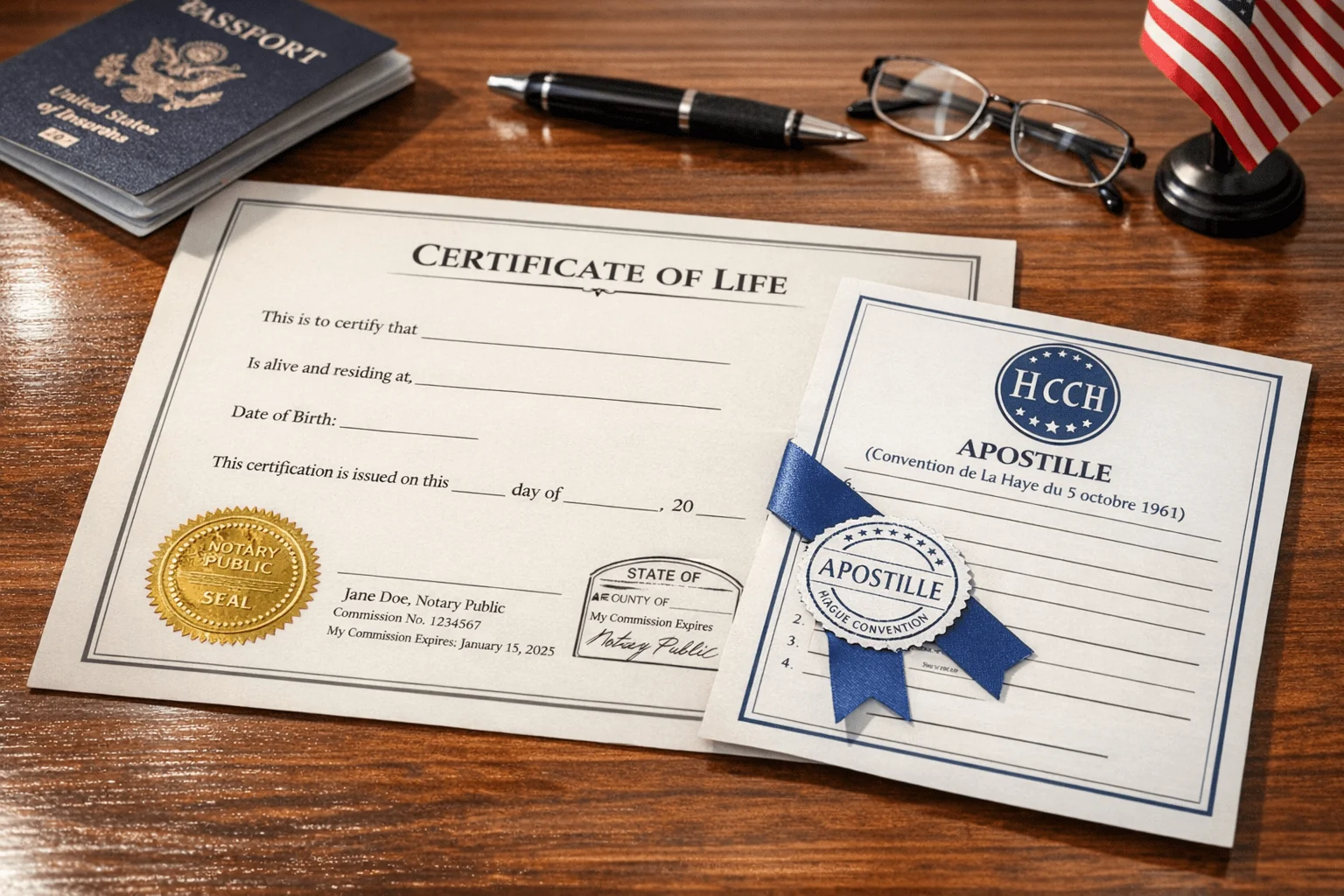
A certificate of life, also known as a proof of life document, is an official confirmation that an individual is alive at a specific point in time. Authorities may refer to this certified statement as a life certificate or certificate of existence. It’s commonly requested by pension funds, insurance companies, and government agencies abroad to assess applications or disburse payments without interruption.
Situations Where a Certificate of Life Apostille Is Required
While a standard certificate of life is sufficient for use within the USA, an apostille becomes the bridge to make it valid internationally. This stamp authenticates the notary’s signature and seal on your document. Below are some of the most common scenarios where you need a certificate of life apostille.
Foreign Pension and Social Benefit Verification
Retirees may be requested to confirm they’re alive if they reside outside the country that pays their pensions or social benefits. Administering agencies periodically require proof that the recipients are still eligible to receive payments. An apostille also ensures that the certificate is authentic, allowing foreign pension officials to accept it without hesitation.
International Insurance and Financial Claims
Insurance providers or financial institutions rely on certificates of life to release insurance annuities or settle inheritance claims. To comply with the strict anti-fraud regulations that these entities must follow, proving that the beneficiary is living is crucial. Hence, a proof of life certificate meets the compliance standards of both the USA and foreign countries, reducing the risk of fraud and disputes.
Government and Administrative Procedures Abroad
You may need to demonstrate your status when applying for a long-term visa or permanent residency permit in another country. Certain immigration offices require this certificate as part of the administrative protocol to ensure the applicant fulfills the terms of their stay. An apostille safeguards its acceptance abroad, helping avoid costly holdups or refusals.
Cross-Border Legal or Compliance Requests
International proceedings, such as estate settlements, alimony arrangements, or child custody cases, may involve presenting proof of life to establish a party’s status. An apostilled document serves as court-ready evidence, reassuring foreign authorities that it’s genuine and can satisfy legal mandates in the respective country. Regulatory bodies may also request this certificate as part of an audit or investigation on international compliance.
Eligibility and Preconditions Before Apostille
Understanding what a certificate of life is only the initial step; preparing it perfectly for apostille processing is equally important. Not all documents automatically qualify, and overlooking preconditions might result in wasted effort. Here’s what to keep in mind:
Who Is Authorized to Issue or Certify a Certificate of Life
Proof of life documents are drafted and signed by the individual themselves. In the USA, a designated official, commonly a notary public, must witness the signing of these sworn statements. Sometimes, other government agencies, such as embassies and consulates, may also provide certification.
Notarization Requirements and Identity Verification
Most of the time, the certificate must be notarized before it can be authenticated. This means you must bring your valid government-issued photo ID to a notary public. The notary then verifies your identity and attests to the authenticity of the declaration. Neglecting this step will likely lead to an apostille rejection.
Validity Periods and Renewal Expectations
It’s worth noting that a proof of life certificate has a limited validity window. Most receiving institutions require it to be within 6 to 12 months old. Submitting an expired one can cause an outright refusal, so it’s best to plan for renewals as soon as possible. Check the specific validity rules in advance and expect to obtain an apostille for a new certificate each cycle.
Format, Language, and Content Requirements
The document’s format, language, and content must adhere to the guidelines given by the requesting authority. There’s no universal form, but you may receive one from your pension or insurance provider. It often includes the person’s full name, date of birth, and a statement confirming existence. Some countries request certified translations, so have it translated before the apostille if this is the case.
Step-by-Step Process to Apostille a Certificate of Life
Securing a certificate of life apostille is more than simply sending all the paperwork to the apostille authority. Breaking the process into clear stages makes it easier to navigate state requirements and prepare your package correctly the first time. We’ll explore every step in this section.
Apostille or Legalization
Start by determining whether your destination country is a member of the Hague Convention. This allows you to choose the right authentication path. If it is, your certificate of life needs an apostille. Otherwise, it must be processed for an authentication certificate at the state office, followed by further verification at the DOS, and then legalization at the embassy or consulate of the foreign country.
Preparing the Certificate of Life for Apostille
Before submission, the certificate must have a flawless notarization. Remember to check the notary’s commission for expiration and status. Once they witness the signature and affix their official seal, ensure these details are clear and legible. If translations are required, engage certified linguists for complete and high-quality versions that meet the destination country’s standards.
Submission to the Competent Apostille Authority
Once prepared, submit the apostille package to the authorized agency, which is typically the Secretary of State’s office in the state where the notarization took place. Most apostille offices accept mail or walk-in submissions, so select the method that best fits your schedule and location.
Processing Review and Issuance of Apostille
The authority reviews and validates the notary’s commission. Once they confirm that everything is in order and the signature and seal on your certificate match the official records, an apostille will be physically attached. Congratulations — the certificate is officially authenticated for global use.
Delivery, Acceptance, and International Use
Finally, the apostilled package will be returned to you via the previously selected courier service. Your responsibility is to forward it to the requesting institution overseas. If the process has been followed precisely, your certificate will be accepted without any problems, allowing your financial matters to stay on track.
Fees, Timeframes, and Practical Planning
Beyond preparation, smart planning also involves budgeting both time and money realistically. Costs, timelines, and unexpected extra steps vary depending on the authority of issuance, receiving country, and whether additional services, such as legalization or translation, are required. Here are some factors to consider:
Typical Apostille and Notarization Costs
Notarization fees are typically modest, ranging from $5 to $15 for administering the oath. The state apostille fees vary by jurisdiction, often within the range of $5 and $20 per document. Third-party agencies charge professional handling fees for submission and delivery, and the total is calculated based on your preferred service speed and courier method.
Standard and Expedited Processing Timelines
Processing through a Secretary of State or an equivalent state agency can take anywhere from a few days to several weeks. For urgent needs, you may choose expedited or rush options, but availability depends on the state’s current workload. In addition, always create a buffer for mail transit and any additional services to ensure your apostille arrives on time for pension or insurance claims abroad.
Additional Expenses for Legalization or Translation
If your destination isn’t a party to the Hague Convention, legalization through an embassy or consulate is often mandatory, adding substantial cost and time to the authentication process. Furthermore, the receiving institution may require documents in a specific language, making it essential to budget for a certified professional linguist in advance.
Common Errors That Delay or Invalidate Apostilles
Submitting a proof of life certificate to a USA apostille authority follows a precise procedure, but minor mistakes might cause serious delays and setbacks. Awareness of the most common errors safeguards you from frustrating resubmissions and added expenses.
Incomplete or Improper Certification
The certificate won’t pass the review phase if it lacks important details — such as full name, date of birth, or confirmation. Missing notarization or improperly recording the signing are frequent reasons for immediate rejection at the state level. The certificate must be perfectly notarized when it leaves the notary’s desk.
Using an Expired or Incorrectly Issued Certificate
An expired certificate of life, even with a flawless apostille, will be rejected by foreign institutions. It’s only valid for a limited time, so create a fresh one if your current certificate is older than a year. Similarly, certificates notarized by a notary public with an expired commission will be denied as well.
Mismatch Between Destination Country Requirements
Every country has its own rules for the certificate of life apostille process. Always seek clarity from the requesting authority on formatting, timeframe, and content before drafting your document. Assuming all countries accept the generic form you find online is a critical mistake that can result in wasted time and additional costs.
Translation and Supporting Document Oversights
Failing to present the document with a certified translation if requested often leads to rejection. Moreover, neglecting supporting documents, such as a copy of your passport or a formal request letter from the foreign institution, forces you to start all over again. Ensure translations are complete and accurate, and include all required supplementary documents to avoid unnecessary complications.
Prepare Proof of Life Documents Without Stress
Apostille your certificate of life early to enjoy smooth recognition abroad and prevent delays. With our guidance and preparation assistance, you can secure this vital authentication the first time. EZ Apostille makes it fast and reliable for you — contact us for a personalized quote and explore your options now!
FAQ
Here are clear answers to common questions about proof of life certificates in the USA.
Can a representative submit the document for an apostille on my behalf?
Absolutely, a family member, friend, or professional service provider can handle the submission for you.
Are digital or scanned Certificates of Life accepted internationally?
No, only notarized, original certificates can be apostilled. Any other versions, including digital or scanned copies, will be rejected.
What happens if an apostilled Certificate of Life is rejected abroad?
Rejections abroad usually occur due to country-specific requirements. Contact the receiving institution to inquire about the rejection reason and address concerns appropriately.
Is the apostille still valid if personal details change later?
Yes, the apostille is valid indefinitely because it validates the document at a specific point in time. However, foreign authorities may ask you to obtain a fresh underlying document to reflect the changes, which means you’ll need to create and apostille a new certificate of life.
Can multiple countries accept the same apostilled Certificate of Life?
Yes, as long as they’re members of the Hague Convention. You can create multiple copies of your certificate and have them notarized. Then, submit a bundled apostille request at the state office. Note that it might not work if the receiving countries have conflicting rules on the certificate’s format or content.
Related Posts
FBI Background Check for Bulgarian Residency: What U.S. Applicants Need to Know

Getting Married Abroad: U.S. Documents Couples May Need